
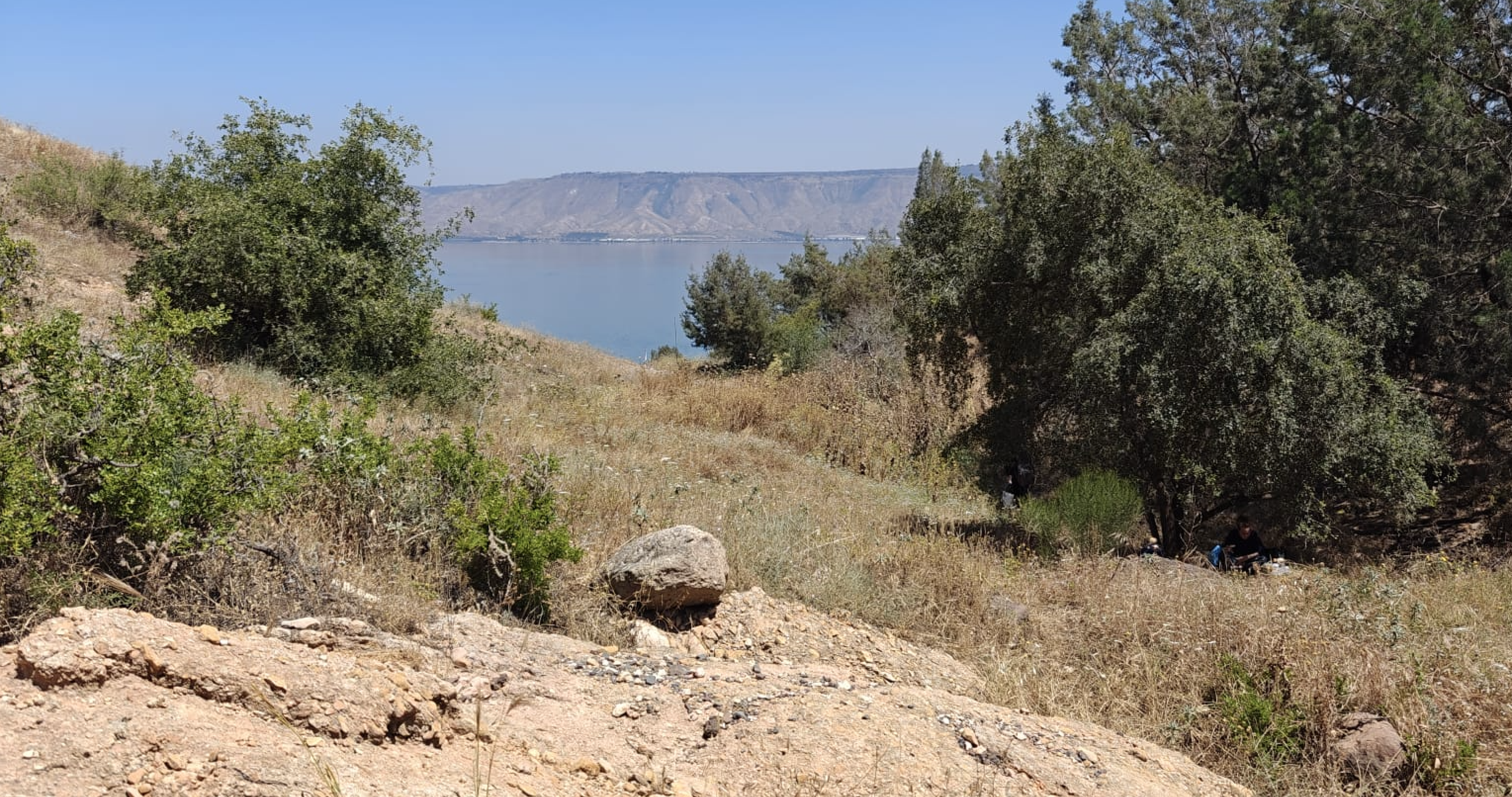
An Immersive Women’s Journey Through the Living Landscape of Eretz Yisrael.
Beneath the Surface of Tiveria
Rachel Leah Weiman
We are at the beginning of a deeper remembering.
Perhaps geula IS happening the way water moves upon rock: quietly, beneath awareness, reshaping what once appeared unmoving until suddenly the entire surface reveals that transformation was taking place all along.
בהיסח הדעת / b’hesach ha’daat.
Not always through force.
Sometimes through hidden flow.
Until one day,
the stone opens.
An Immersive Women’s Journey Through the Living Landscape of Eretz Yisrael
Wells, Women, and the Hidden Architecture of Teshuva
There are experiences that conclude when the itinerary ends, when the buses return home, when the photos are uploaded and the day folds quietly into memory. And then there are experiences that continue reverberating long afterward, moving silently through the body and neshama like underground water beneath stone.
Our journey through Tiveria belonged entirely to the second kind.
Even now, I find myself struggling to speak about it in ordinary language. What unfolded among our circle of women moved far beyond what could reasonably be described as a tour, workshop, hike, or retreat. Something far more subtle was moving beneath the visible structure of the day. There was an unmistakable feeling that we were not merely traveling through physical locations, but through layers of consciousness, memory, feminine becoming, and concealed spiritual architecture. Again and again throughout the day, I sensed that the land itself was teaching.
And perhaps this felt especially palpable because of the moment in history in which the journey took place.
Maskit and I had been planning this journey for weeks beforehand, during a period when the north of Israel was still under daily missile attacks. Again and again we found ourselves going back and forth, deliberating whether a day like this in nature was even responsible to attempt. Every practical detail carried another layer beneath it: Is it safe enough to gather women outdoors? Will the roads remain open? Will people even emotionally be able to enter a day of softness, walking, and presence while the atmosphere of war still lingers so heavily over the country?
And perhaps this is part of what made the experience itself feel so moving.
Because beneath the visible simplicity of women gathering in nature was the quiet reality that none of us were arriving untouched. We were meeting during a ceasefire, but ceasefire does not mean the nervous system immediately exits survival mode. After more than two years of ongoing war, uncertainty, alerts, funerals, prayers / תפילות, displacement, fear, and the constant low hum of vigilance that has settled into life in Eretz Yisrael, the body does not automatically remember how to soften.
Which is why, as the day unfolded, something almost startling began to happen.
The pace itself changed.
Breath slowed.
Conversation softened.
Women who arrived carrying visible tension slowly began exhaling into the landscape.
It felt as though the land itself was gently teaching us how to return to presence again.
This is what I am slowly learning through these Ohr Pnimi journeys: the land does not only show us history. The land teaches. It waits until the body slows down enough to listen, and then it begins revealing layers that were hidden in plain sight. A stone becomes a teacher. A well becomes a mirror. A trail becomes a map of the inner world. A group of women, many of whom began the morning as strangers, begins to feel like a vessel where something long held in silence can finally breathe.
And this is why I want to invite you into the story slowly. Not as an itinerary. Not as a report. Not as “what we did in Tiveria.” I want to bring you into the experience the way it happened inside me: first as a quiet stirring, then as a softening, then as a series of openings that kept deepening as the day continued.
Because this journey was not only about Tiveria.
It was about Jewish women after years of carrying so much.
It was about the body beginning to trust again.
It was about remembering names, hidden waters, old selves, good points / נקודות טובות, feminine strength, and the possibility that redemption may sometimes unfold the way water moves upon stone: slowly, quietly, almost invisibly, until one day the surface itself reveals that transformation was taking place all along.
Chazal teach that Mashiach comes בהיסח הדעת / b’hesach ha’daat, when the mind is no longer grasping, forcing, strategizing, or trying to manufacture revelation through sheer effort. Perhaps this is because the deepest transformations often begin beneath the threshold of immediate perception. Long before anything visible changes, hidden currents are already moving underneath the surface of reality.
Like underground water slowly reshaping rock from within.
Like Torah engraving itself silently into the heart.
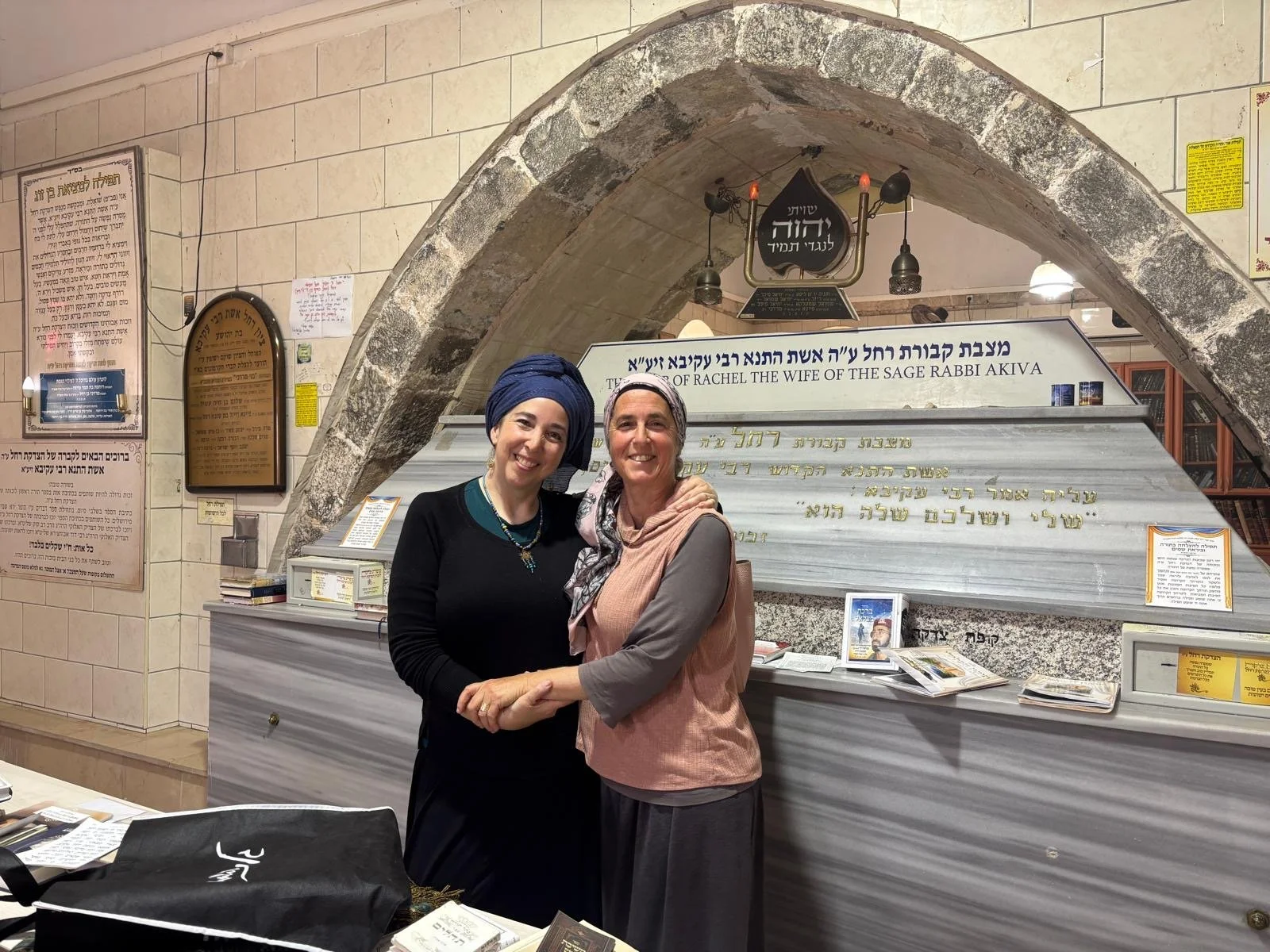
Opening Circle at the Kever of Rachel, Wife of Rabbi Akiva
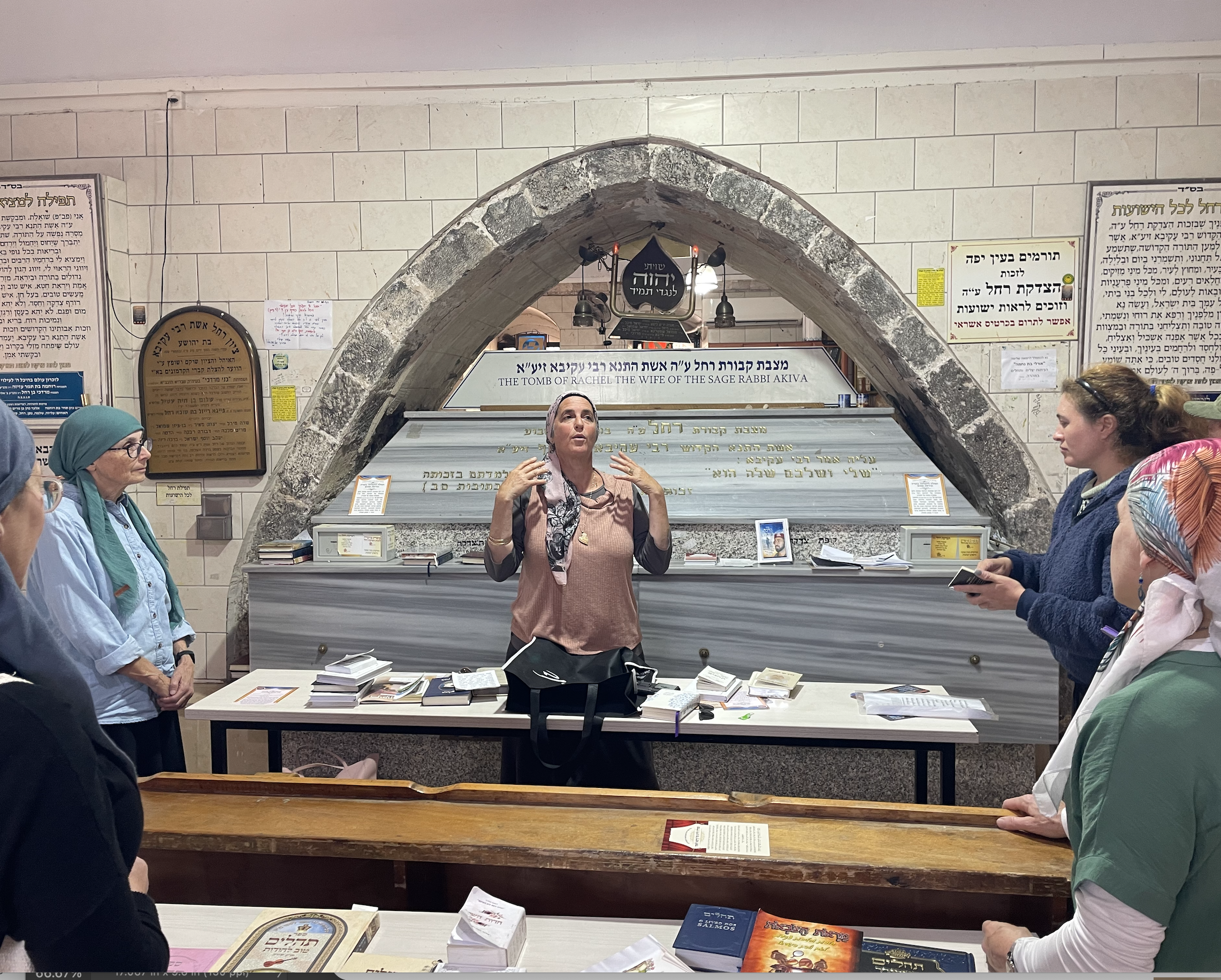
We began at the kever of Rachel, wife of Rabbi Akiva, and even before speaking, I felt that we needed to arrive differently. Not only physically, but inwardly. There is a way people often arrive at a program still carrying the pace of the car, the phone, the messages, the house, the unfinished responsibilities, the emotional residue of whatever happened before they came. The body may be standing in a holy place, but the nervous system has not yet entered. So before teaching, before explaining, before trying to make meaning, we stood in a circle and allowed the place itself to enter us.
The water.
The stones.
The wind.
The simplicity.
The quiet presence of Rachel.
Not Rachel Imeinu of the Torah, but Rachel bat Kalba Savua, the wife of Rabbi Akiva, whose hidden mesirut nefesh helped reveal one of the greatest lights of Torah she’be’al peh. There is something so tender about beginning with her because her greatness was not loud. It was not public in the way Rabbi Akiva’s Torah became public. Her light lived in her capacity to see. She saw Rabbi Akiva before he became Rabbi Akiva. More deeply, she saw him before he could yet see himself.
That kind of seeing is not ordinary encouragement. It is not optimism. It is not telling someone, “You can do it,” from the outside. It is the ability to perceive the concealed point / נקודה inside another person while it is still covered by simplicity, confusion, roughness, or unformed possibility. It is the capacity to remain faithful to hidden becoming before there is visible evidence that the becoming will ever emerge. This is a deeply feminine inner work / עבודה. Not passive waiting, but active holding. Not forcing revelation, but creating the conditions where revelation can ripen safely.
That morning was the thirty-fifth day of the Omer, ל״ה בעומר / Lah BaOmer, the day of Malchut she’b’Hod. ל״ה / lah means “to her,” and those two letters accompanied me throughout the day. There is a deep movement in Torah toward the feminine vessel / כלי, toward the place that receives, holds, gestates, and eventually reveals. So much light remains abstract until there is a vessel / כלי able to hold it. So much Torah remains potential until it becomes lived reality. On that thirty-fifth day, it felt as though the entire journey was moving לָהּ / to her: toward Rachel, toward Malchut, toward Shechina, toward the receptive place in the Jewish woman that does not need to force light, but can hold it until it becomes real.
Above Rachel’s kever were the words:
שִׁוִּיתִי ה׳ לְנֶגְדִּי תָמִיד
I have placed Hashem before me always. - Tehillim 16:8
Those words became the opening doorway. We entered a meditation on the four-letter Name of Hashem, not as an intellectual inner intention / כוונה, but as a way of orienting the body, breath, and heart. To place Hashem before us always is not only to imagine something above us. It is to realign the inner gaze. It is to remember that the deepest point of the self is not the anxious self, the performing self, the defended self, or the exhausted self. There is a deeper root, a place within the neshama that stands before Hashem and remembers.
From there, we turned toward our Hebrew names. Each woman was invited to listen inwardly to the resonance of her name, not as a label, not as what people call her when they need something from her, but as a doorway into essence. Something began to happen in that circle that was very quiet and very real. Women began remembering. One woman connected to a name she had not fully felt in years. Another sensed a thread back to a grandmother. Another felt the tenderness of a younger self. It was not dramatic from the outside, but inside the circle, something was opening.
Names became doors.
Women began recognizing one another beneath the surface.
Souls / נשמות began connecting.
And this felt completely aligned with Rachel, wife of Rabbi Akiva. She teaches us that the hidden point / נקודה inside a person can be seen before it becomes obvious. She teaches that another person’s future light sometimes needs a witness before it can become visible. Standing there, among women who had come from different places, ages, histories, and inner landscapes, I felt that our journey had begun not with travel, but with remembrance.
The Wooden Deck, the Sanhedrin Trail, and the Ancient Amphitheater
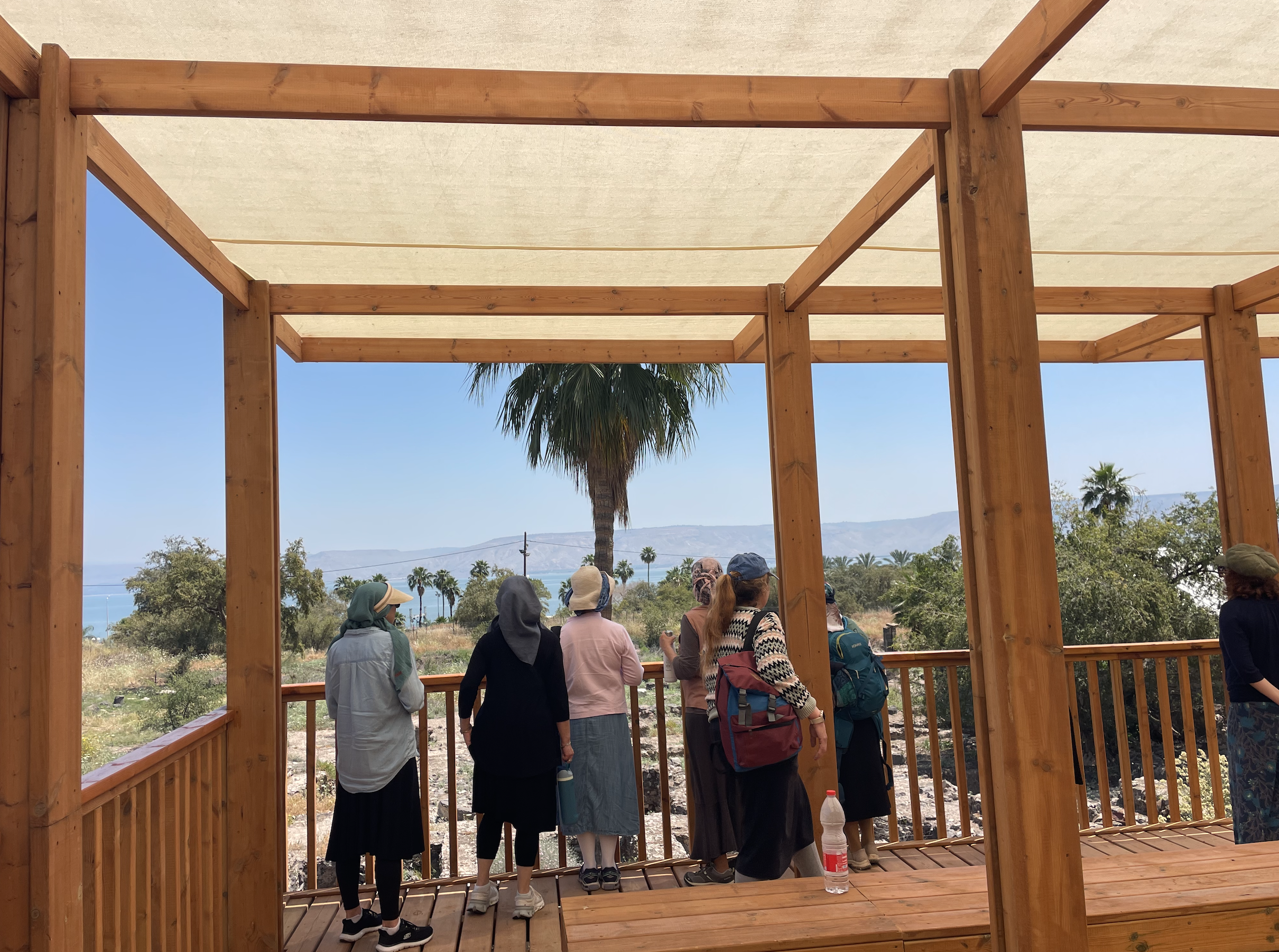
From the softness of Rachel’s kever, we continued toward the wooden deck leading to the end of the Sanhedrin Trail and the ancient amphitheater. The atmosphere changed almost immediately. Something in the air became heavier, more charged, more complex.
On one of the stones along the trail was a teaching that seemed to open the entire next layer of the journey:
עתידין בתי תיאטראות ובתי קרקסאות שבאדום שילמדו בהן שרי יהודה תורה ברבים
In the future, the theaters and circuses of Edom will become places where the princes of Yehuda teach Torah publicly. - Megillah 6a
It is one thing to learn such a teaching in a sefer. It is another thing entirely to read it while walking toward the ruins of a Roman amphitheater. Suddenly the words were not abstract. We were approaching the very kind of space that once represented Roman spectacle, power, entertainment, public display, and perhaps even cruelty.
Some women felt reluctant to step inside.
That hesitation mattered.
It was not resistance to the program. It was the body sensing something the mind had not yet fully named.
What had happened there? What did Jews experience under Roman rule in places like this? What kind of laughter filled those stones? What kind of humiliation, fear, and violence may have been normalized as entertainment? What does it mean for Jewish women to stand there now, not as objects of spectacle, not as a crowd seeking distraction, but as learners, as witnesses, as bearers of Torah?
The amphitheater became more than a historical site. It became a mirror. So much of modern life still carries the imprint of a Roman nervous system: visibility as worth, performance as identity, image as power, the body turned outward for approval, the inner world shaped by the gaze of others. Women know this pressure intimately. The pressure to appear fine, beautiful, composed, inspired, capable, emotionally regulated, spiritually connected, and pleasant, even while carrying private griefs, unfinished questions, old fears, and unspoken exhaustion beneath the surface.
Standing there, I understood more deeply why the Mishna says these places will be transformed into study halls / בתי מדרש. The teaching does not say the theaters disappear. It says they are transformed. The very place of spectacle becomes a place of Torah. The place of externality becomes a place of inner dimension / פנימיות. The place where identity was performed becomes a place where essence can be recovered.
This opened a gateway for many of us into the past, both the collective past of Am Yisrael and the private past each woman carries within herself. Some women quietly felt old versions of themselves rise up in memory. For baalei teshuva, this can be especially tender. Former selves do not simply disappear. They remain somewhere in the body, in language, in reflexes, in remembered rooms, in old clothing, in music, in photographs, in choices that belonged to another stage of life. Those selves are not always meant to be erased. Sometimes they are waiting to be redeemed.
Perhaps one of the deepest forms of healing is the ability to stand inside the theater of former identities and no longer need to perform them. To remember who we once were without collapsing back into that version of ourselves. To look at the fragments with compassion and ask: What spark was hidden there? What longing was distorted there? What part of me was trying, even then, to find its way home?
Nachal Berniki and the Pinks of Hod she’b’Malchut
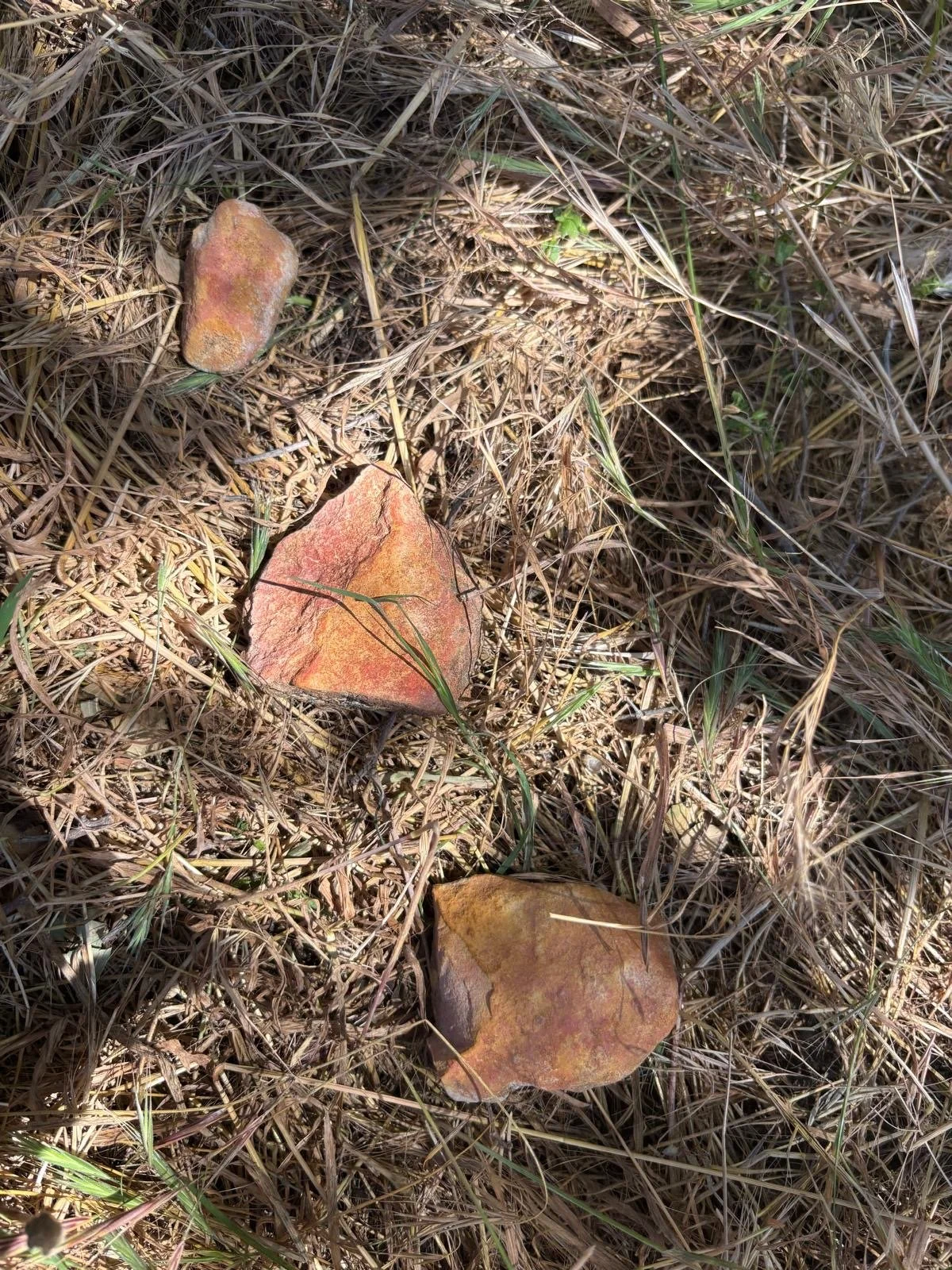
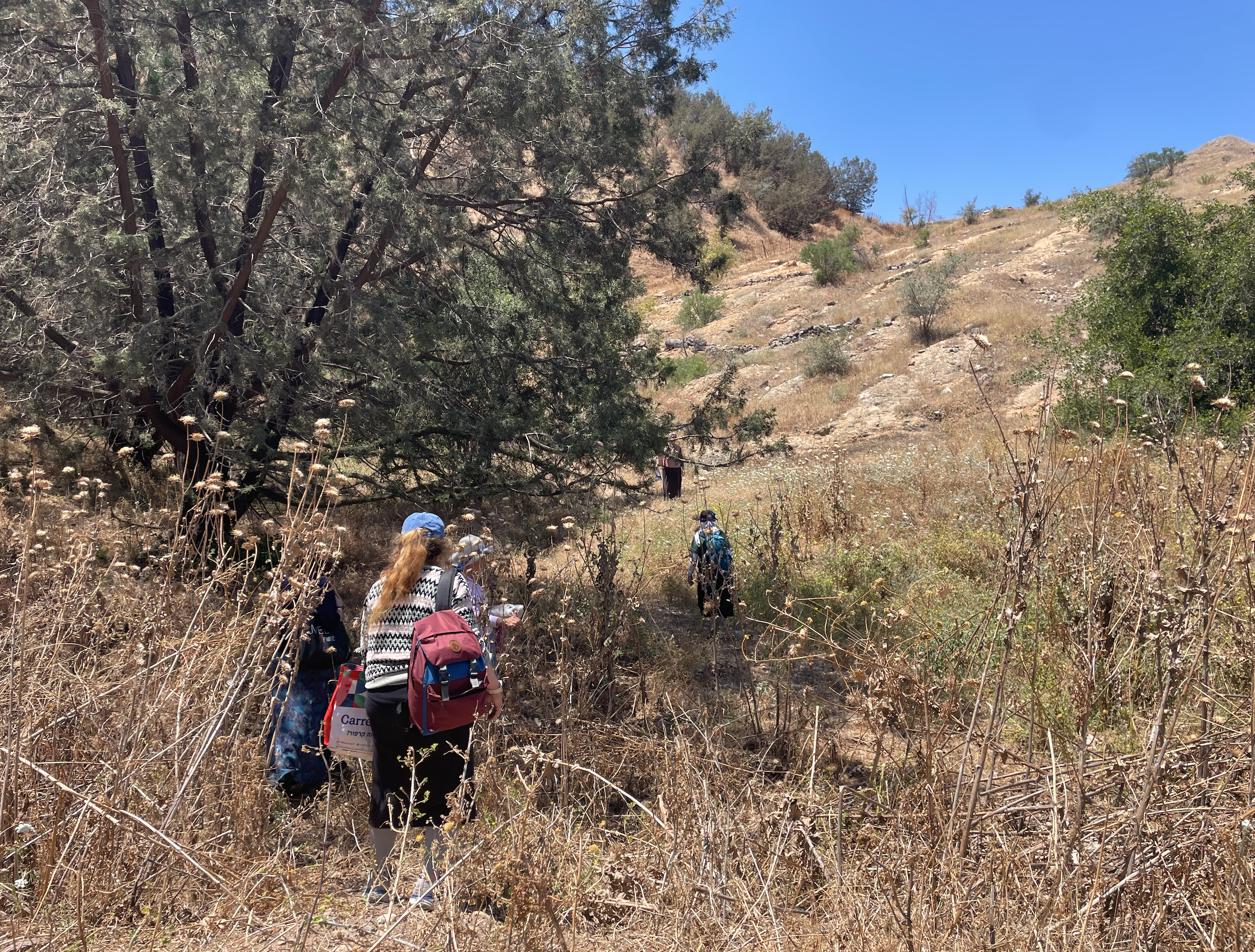
After the amphitheater, we drove only a few minutes, yet the emotional landscape seemed to change completely. We entered Nachal Berniki, and slowly the earth softened into pink. The stones appeared naturally along the path, not arranged for our workshop, not prepared for our theme, simply there, as though the land itself had been waiting to reveal the color of the day.
We were in the inner work / עבודה of Malchut she’b’Hod, and as we entered those pinks, we also touched the feeling of Hod she’b’Malchut, Hod becoming tangible through earth, stone, body, and presence. Certain systems associated with the Ramak connect Hod with softened pink tones, and standing there in Nachal Berniki, the idea felt alive. Pink is not red erased. It is red transformed. It is Gevurah softened through humility, intensity refined until it no longer needs to express itself as control, dominance, or defensiveness.
This is not weakness. It is matured strength. Weakness collapses under pressure, but softened strength remains present without needing to armor itself against every encounter. There is something profoundly feminine in this. The nervous system no longer bracing against life. Vulnerability no longer experienced as danger. Openness no longer confused with fragility. The stones themselves seemed to carry this wisdom. Their beauty had not emerged despite time, water, heat, pressure, and exposure, but because of them. Time had not diminished them. It had gentled them.
We entered a Torat HaTzeva meditation with the stones. Each woman was invited to walk quietly in a small solitary reflection / התבודדות and gather a few stones. Not the perfect stones. Not necessarily the prettiest stones. The stones that called to her.
This kind of instruction seems simple, but it reveals so much.
What do we reach for when no one is telling us what is valuable?
What does the hand know before the mind explains?
Which texture draws us?
Which weight feels familiar?
Which broken edge feels alive?
We connected the gathering of stones to the nikud of Hod: קובוץ / Kubutz. Three small points beneath a letter. A sound that gathers inward: ooo. Not spreading outward, not rising dramatically upward, but drawing inward and collecting beneath the surface. Three dots. Three stones. Three points / נקודות gathered below the visible letter. Hidden support. Hidden sound. Hidden movement.
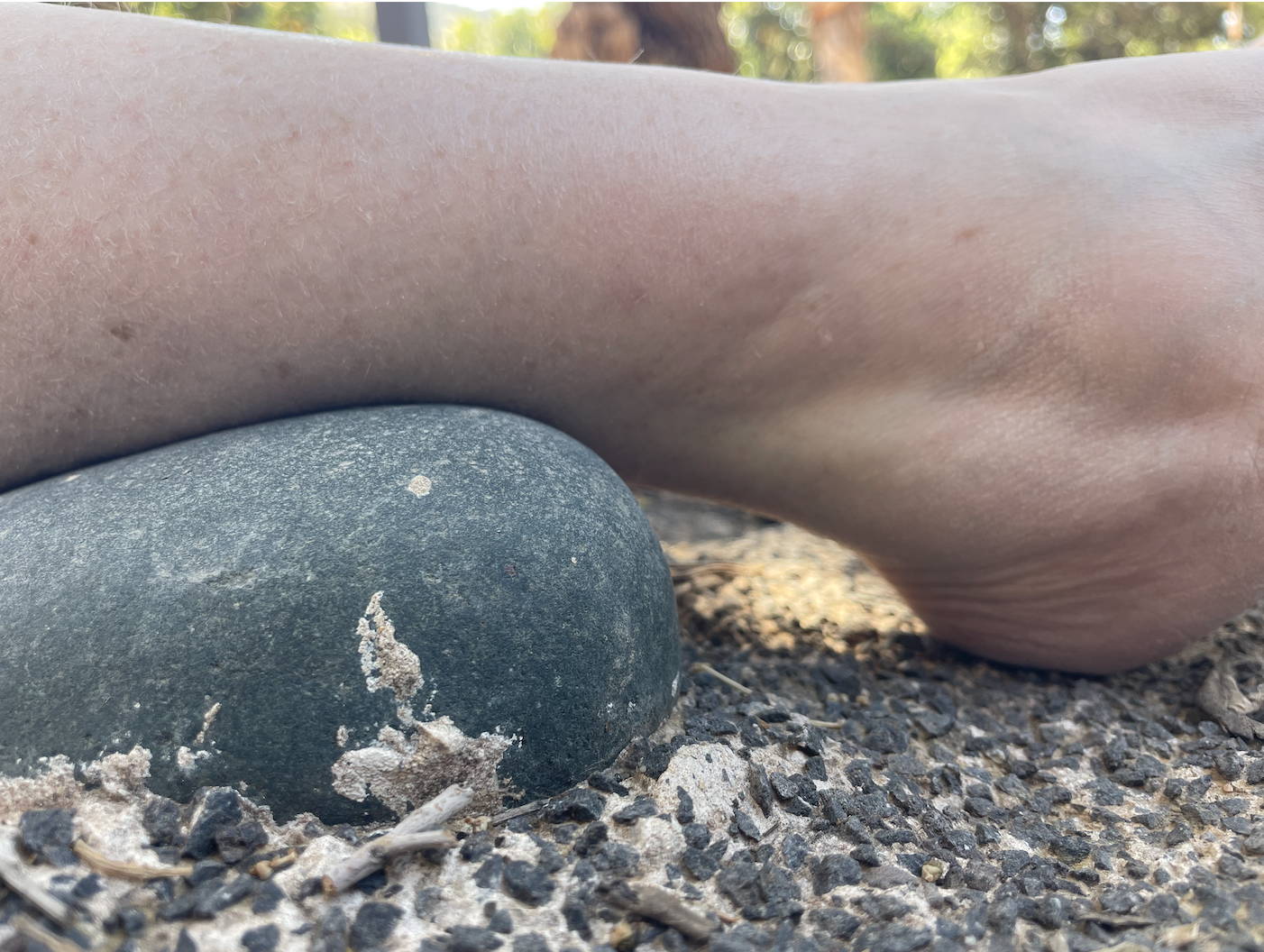
The women placed the stones before them and practiced recognition and felt sensing / הכרה והרגשה. This was not about immediately interpreting the stone or turning it into a symbol. It was about slowing down enough to truly encounter. The texture. The temperature. The unevenness. The color changes. The weight in the palm. How many years did this stone need in order to become this shape? How much pressure did it know? How much water touched it? How much silence formed it?
Then the practice became relational. Women placed stones near one another, creating small constellations like kubutz points gathered beneath a hidden letter. We practiced giving good points / נקודות טובות, noticing good points in one another. Not flattery. Not performance. Not dramatic declarations. Just the simple and powerful inner work / עבודה of seeing. One woman would offer another a true point of goodness she had noticed: courage, softness, presence, honesty, light, patience, quiet strength.
This brought us back to Rachel, wife of Rabbi Akiva. She saw the point / נקודה before it was revealed. Here, among the pink stones of Hod, the women practiced seeing one another that way. The stones became vessels. The words became placement. The group became a living kubutz, separate points gathered into relationship.
The Reflexology Trail: Where the Sole Meets the Soul
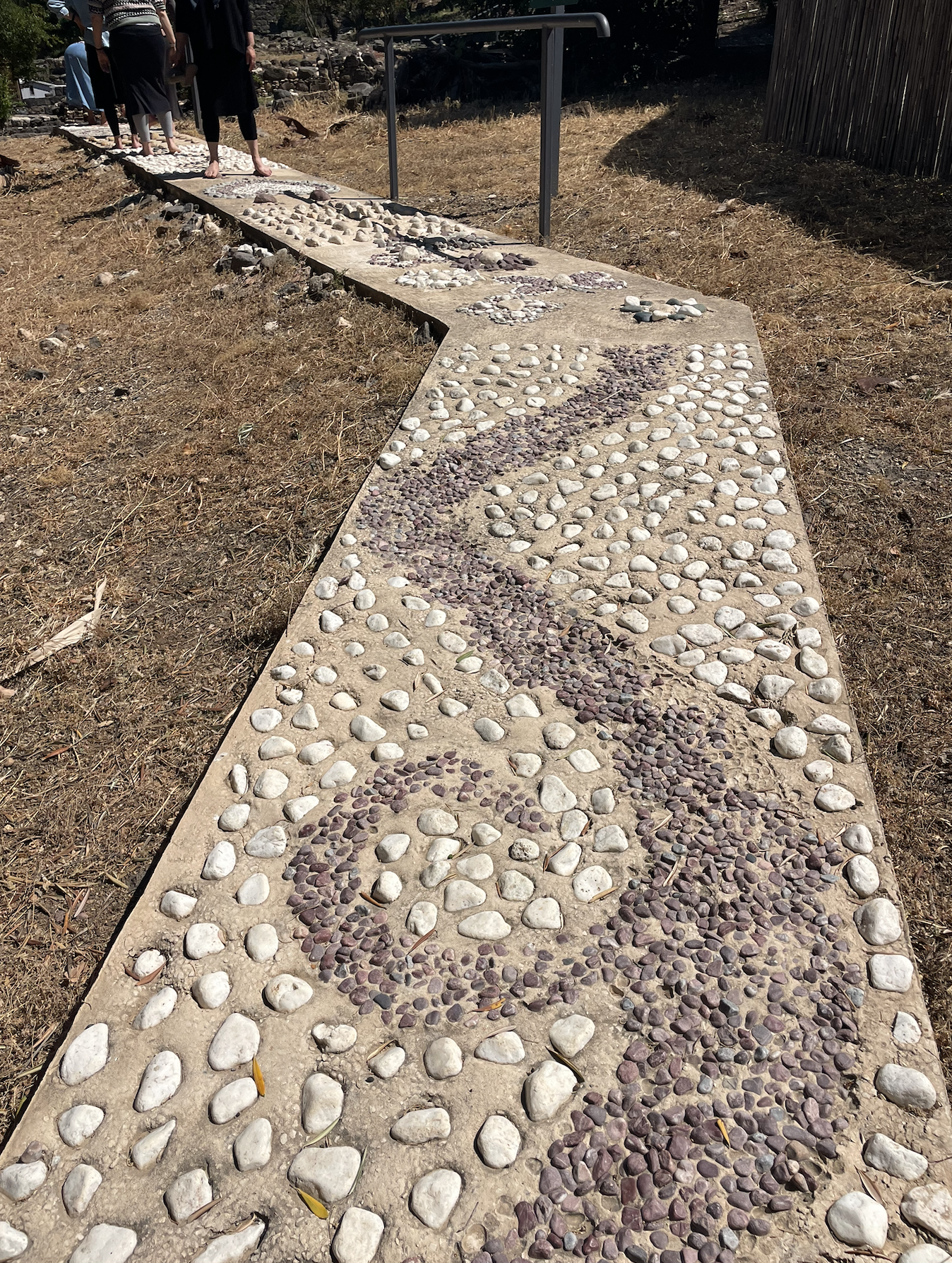
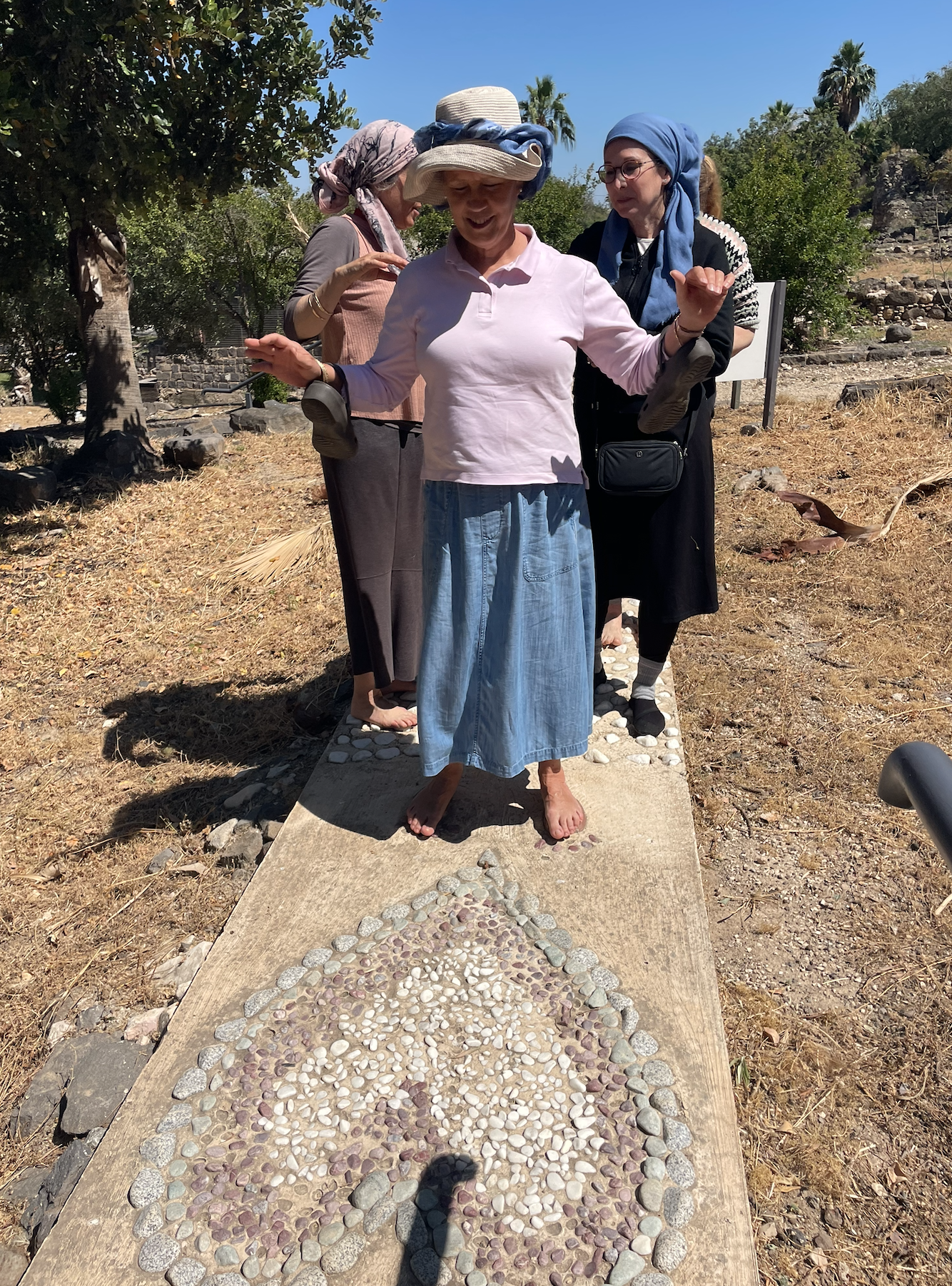
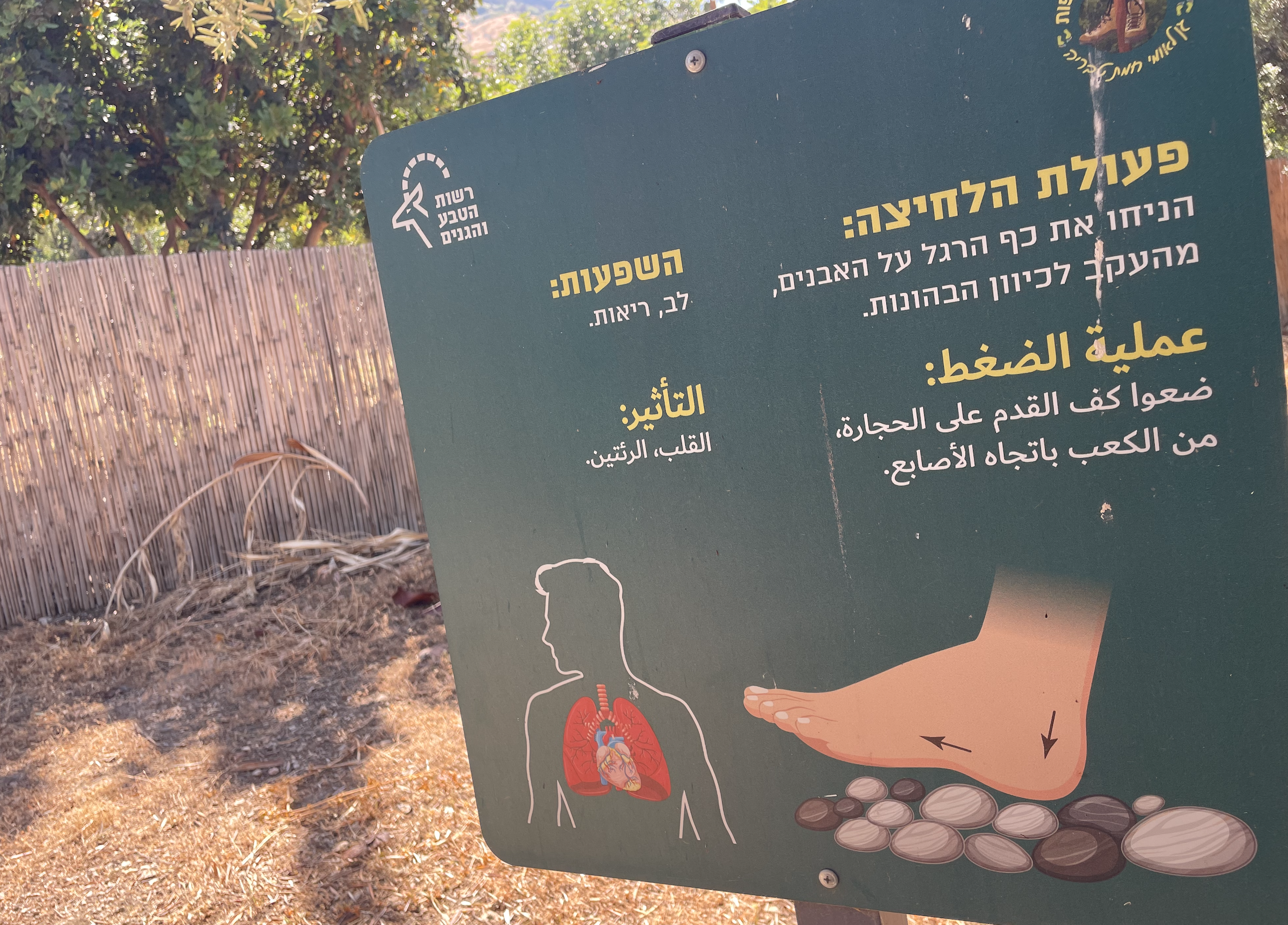
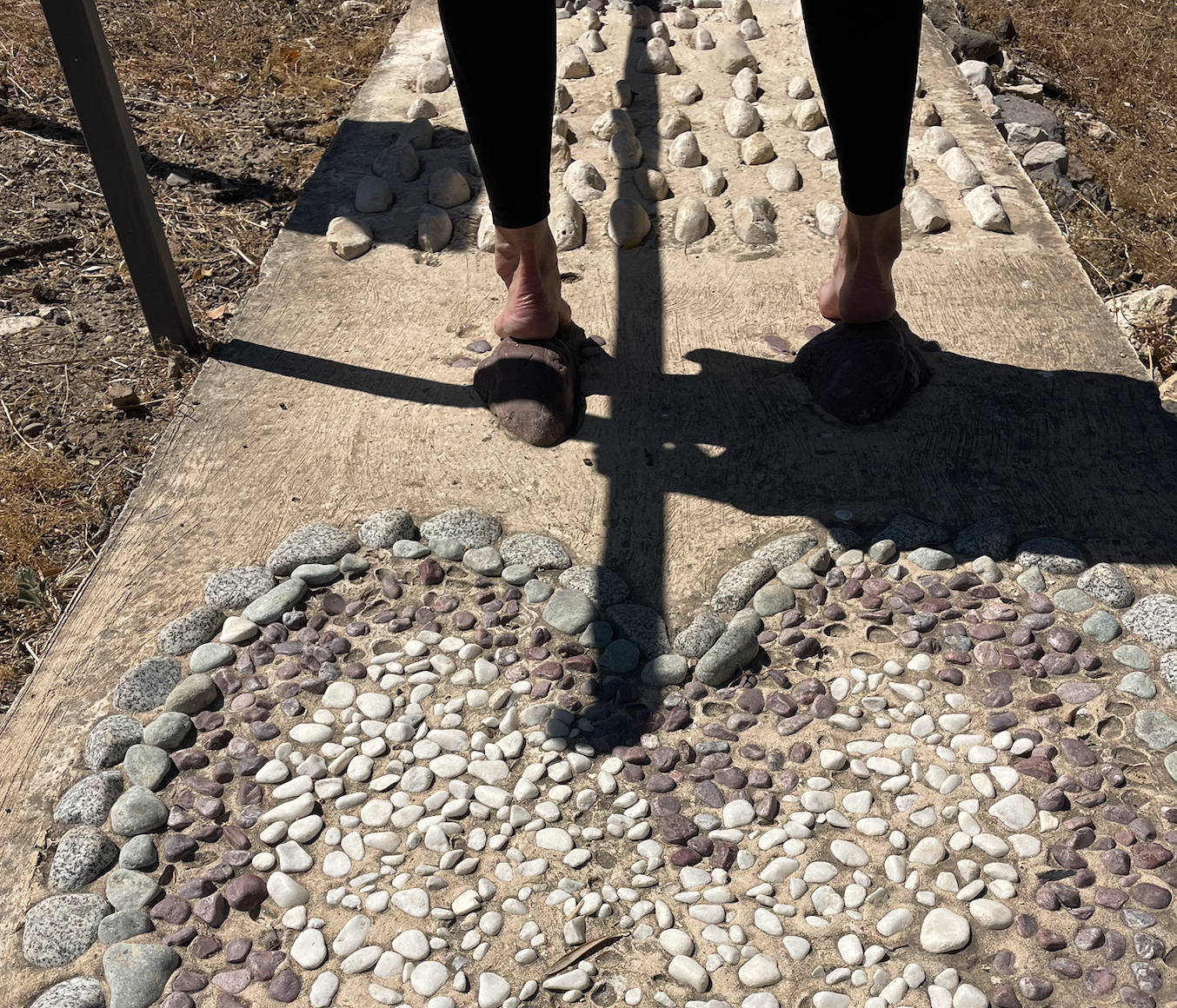
Later in the day, we walked barefoot along the reflexology trail. At first, the experience felt almost playful. Women laughed as they stepped gingerly over the stones, adjusting their pace, reacting to unexpected sensations beneath the feet. But gradually the laughter softened. Some women grew quiet. The body had entered the conversation, and once the body begins speaking, the mind cannot remain in control in the same way.
I kept thinking about the mysterious closeness between sole and soul. In reflexology, one small point in the foot can correspond to an entirely different system in the body: heart, lungs, spine, stomach, breath. A place that appears peripheral is actually connected to the whole. The body is full of hidden correspondences. Touch one point deeply enough and something elsewhere responds.
Perhaps the neshama works this way as well. Sometimes one small moment of genuine contact begins to reorganize an entire inner reality. A conversation that reaches beneath politeness. A breath that finally enters the chest. A moment of being seen without needing to explain oneself. A quiet acknowledgment from another woman. From the outside, these moments may appear small, but internally they can open entire chambers of feeling. Something defended softens. Something frozen begins to move. Something lonely realizes it has been met.
This is why the day felt so different from a lecture about healing. The women were not discussing concepts from a distance. They were walking them. Wisdom was rising from the earth into the feet, from the feet into the breath, from the breath into awareness. Torah was not hovering above life as an idea. It was entering the gait, the nervous system, the pace, the way one foot met the next stone and the body learned to listen.
Chamei Tiveria: Heat Beneath Water
By the time we reached Chamei Tiveria, symbolism itself had almost dissolved into direct experience. The hot springs did not feel like a metaphor added onto the day. They felt like the day’s inner language made physical: water above, heat below, softness held over fire, warmth rising from hidden depths.
Perhaps this is the emotional condition of our generation. So much concealed heat lives beneath the visible surfaces of people’s lives: grief beneath functionality, fear beneath composure, longing beneath productivity, exhaustion beneath capability, trauma beneath routine, hope beneath restraint, love beneath silence. People walk through the world appearing intact while carrying entire inner landscapes of fire beneath the surface.
And yet the waters of Tiveria do not heal through eruption. They do not demand that the hidden heat explode outward. They offer another model entirely: warmth held within containment, fire softened through water, thawing gradual enough that what has been frozen can melt without shattering. This, too, felt like Torah. Not the Torah of intensity for its own sake, but the Torah of integration, of allowing what has been buried within the body to reenter life slowly enough to become part of the whole.
The hot steam rising from the earth became its own teaching. The heat comes from below, from places we cannot see, through channels hidden beneath the surface. A person may think nothing is changing because the surface still looks the same, while underneath, pressure, warmth, water, and time are already rearranging the inner terrain.
For women who have carried too much for too long, this is not a small teaching. The body often needs permission to soften before the heart can. The nervous system needs to feel held before the neshama can reveal what it has been guarding. The springs did not ask for explanation. They asked for surrender into being held.
Rabbi Meir, the Ancient Synagogue, and the Women’s Closing Circle
Before entering the springs, we gathered in the ancient synagogue connected with Rabbi Meir Baal HaNess. Practically, it was not easy to gather there. The space was open and active, with movement around us, visitors nearby, and the complexity of trying to create a women’s circle in a living public site. But perhaps that too was part of the inner work / עבודה. Kedusha does not always wait for ideal conditions. Sometimes Torah must be received amid movement, voices, sunlight, stone, and the imperfect reality of the moment.
Maskit explained the mosaic tile floor: the twelve zodiac signs, the four seasons, the four women. The floor itself held a vision of time, cycles, cosmic order, feminine presence, and earthly beauty. It was striking to stand in a place where ancient Jewish life had made room for the movement of the heavens through image and symbol. Months, seasons, constellations, women, earth, and Torah were all beneath our feet. It was as though the floor itself was saying: nothing is separate. Time has a body. The year has a rhythm. The Jewish woman stands inside cycles larger than herself, and yet she participates in revealing them.
We learned Rabbi Meir’s teaching:
אֵיזֶהוּ מְכֻבָּד? הַמְכַבֵּד אֶת הַבְּרִיּוֹת
Who is honored? One who honors other beings. - Pirkei Avot 4:1
By then, the teaching felt less like a statement about manners and more like the organizing principle of the entire day. Honor / כבוד is not flattery, politeness, or social grace. It is the capacity to make room for the hidden reality of another human being. To honor someone is to relate not only to what is visible, articulate, and already formed, but to the concealed dignity still becoming within them. It is to stand before another person with enough spaciousness that her light does not have to defend itself in order to appear.
This teaching gathered every part of the day back into one center. Rachel honored the hidden Rabbi Akiva before anyone else could see him. The Roman theater, with all its distortions, carried the possibility of becoming a study hall / בית מדרש. The pink stones taught us that strength can soften without collapsing. The reflexology path taught us that one hidden point can affect the whole. The hot springs taught us that buried heat can rise gently enough to heal.
And then we closed in a circle of women.
We looked into one another’s eyes.
After a day of walking, learning, gathering stones, entering memory, touching ancient places, and allowing the body to slow down, eye contact itself became a form of Torah. No one needed to say very much. The looking was enough. Each woman carried an entire inner world into that circle, and for a few moments, the group practiced honor / כבוד not as an idea, but as a lived reality.
I see you.
You are here.
Your story matters.
Your hidden light does not need to perform in order to belong.
As I drove home from Tiveria that evening, I realized that the most powerful moments of the day had not been dramatic. There had been no single overwhelming revelation, no spectacle, no obvious miracle that could be easily photographed or explained. The kedusha had lived somewhere quieter: in the slowing down, in the pauses between conversations, in the way women began breathing differently, in the feeling that no one needed to perform spirituality in order to belong.
And perhaps this is part of the deeper story unfolding among Jewish women right now. Not louder spirituality. Not greater performance. Not more image. But a return to embodiment, relational truth, and the feminine wisdom of allowing life to ripen rather than forcing revelation prematurely.
Like water beneath stone.
Like heat beneath springs.
Like Torah engraving itself slowly into the heart.
After everything Am Yisrael has carried, after war, fragmentation, fear, and years of inner galus, Jewish women are still gathering beside wells. Still listening for hidden water. Still carrying tenderness toward one another. Still believing, perhaps against all evidence, that softness can transform stone.
We are at the beginning of a deeper remembering.
Perhaps geula happens the way hidden water moves upon rock: quietly, beneath awareness, reshaping what once appeared unmoving until suddenly the entire surface reveals that transformation was taking place all along.
בהיסח הדעת / b’hesach ha’daat.
Not always through force.
Sometimes through hidden flow.
Until one day,
the stone opens.
INNER TIVERIA
Like water beneath stone.
Like heat beneath springs.
Like Torah engraving itself slowly into the heart.
What sets us apart
As a model for absolutely essential (in my opinion)
womens’ avodah in these days,
yesterday’s journey on the Land together
should be a monthly practice
-Leah Glaser
It wasn't just a tour of the sites. It was a tour for the soul.
The potential in these collaboration and all the holy Jewish women...the possibilities are endless! So powerful!
The experience was unlike any other.
Thank you for taking us so deep into each other's eyes gateways to the soul💜 what a privilege and precious gift
I would 1000000% recommend your tour to every woman.
I could literally feel all of your heart and soul poured into every minute. You found the perfect ideas, teachings, intentions, and meditations to share.