
Elemental Fusion Embodiment
A Post-Shavuot Journey Through Waterfalls, Basalt, Breath, and Fire
And somehow…
through cold water, volcanic stone,
shared ascent, breath,
Torah, and presence…
the body itself remembered what it means to feel alive again.
The fire had entered the stone.
The stone had begun glowing.
And for one luminous day in the Golan,
Olam Haba seemed to shimmer quietly within this world.
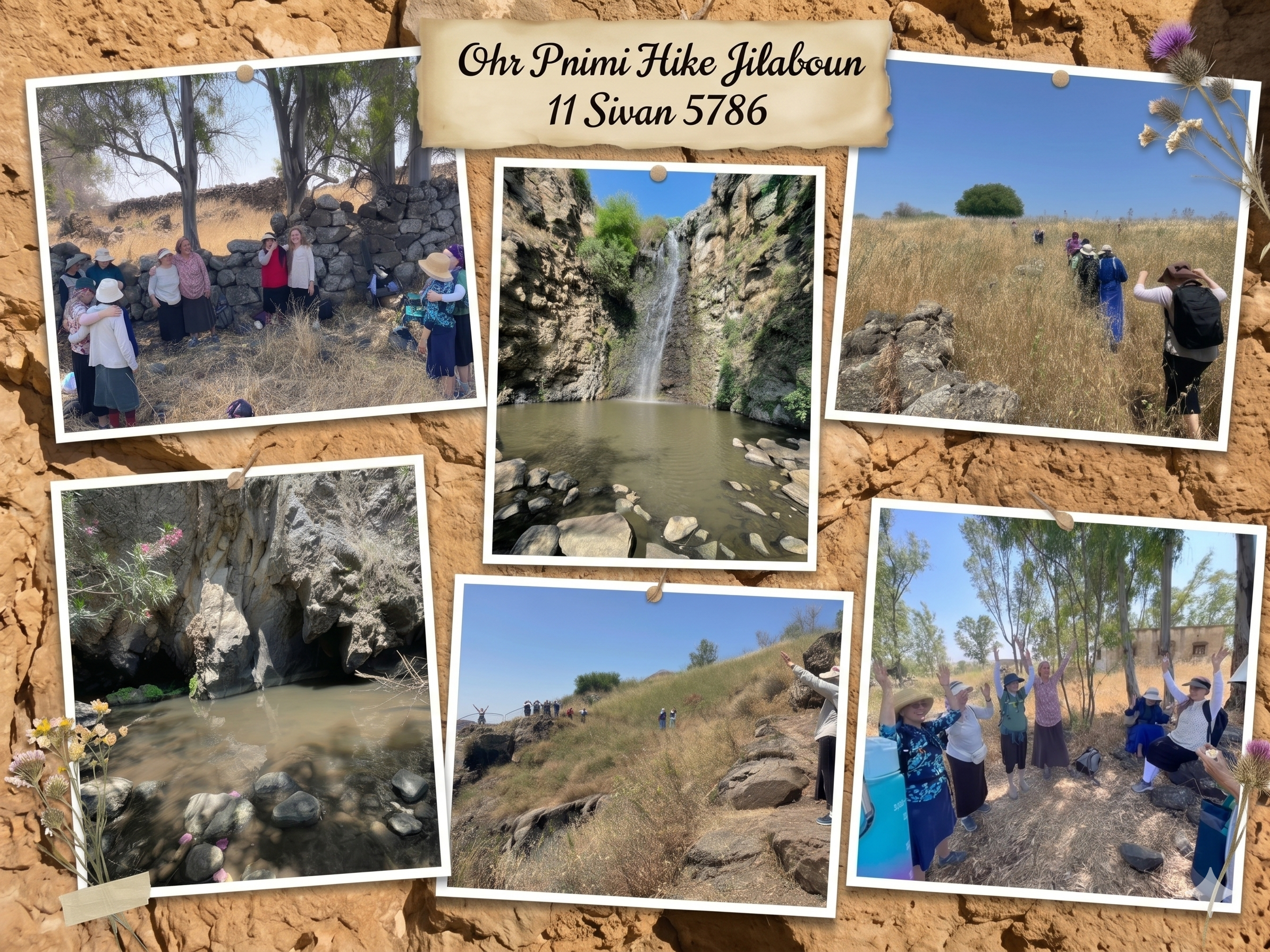
Hike Kfar Devora • Jilaboun • The Living Landscape of Torah
Our journey has been anything but ordinary. Through every step…
There are certain days in Eretz Yisrael that refuse to end when the hike itself is over. They continue reverberating through the nervous system long afterward like an echo moving quietly through the bones. The morning after our journey through Kfar Devora and Jilaboun, many of us woke up physically sore yet strangely exhilarated, carrying the unmistakable sensation that something deep within us had shifted. After months of war tension, constriction, uncertainty, emotional fatigue, and the subtle heaviness that accumulates from too much time indoors holding stress inside the body, the experience felt less like a recreational outing and more like an encounter with aliveness itself. Waterfalls thundered through black basalt cliffs like white fire pouring through stone. Women climbed, breathed, laughed, supported one another, immersed in freezing Hermon snow-water, and stood beneath rainbow mist while Torah moved out of abstraction and entered the body itself. What unfolded was not merely a hike through the Golan Heights. It became an embodied post-Shavuot journey through elemental fusion — water, wind, earth, fire, breath, movement, and revelation — where the living landscape of Eretz Yisrael itself became the teacher.
The morning after the hike, Rachel Leah wrote, “I woke up smiling before I even opened my eyes.” Her thighs were feeling every step of the Golan, every climb, every stone, every descent toward the water and ascent back into the light, and yet at the very same time her whole being felt exhilarated, recalibrated, and deeply rejuvenated. Something about the day had opened places inside the body that had quietly become constricted over many months. It was not simply that a group of women had gone hiking together. They had entered a living landscape where water, basalt, breath, Torah, friendship, physical effort, and presence converged in a way that allowed the body itself to remember life again.
As Maskit said so beautifully at the close of the journey, “What a glimpse of Olam Haba Within This World / עולם הבא בתוך עולם הזה.” And truly, that sentence lingered in the nervous system long after the day ended. Something about the experience felt suspended between worlds — entirely embodied, entirely physical, and yet simultaneously carrying the unmistakable atmosphere of something beyond ordinary existence. Not detached from the world, but this world itself becoming illuminated from within. A reshimu overflowing in shefa / רשימו בשפע.
As one participant, Jody, reflected afterward, “It wasn’t just a hike. It felt like a mini-retreat.” Somehow that simple sentence captured exactly what unfolded in the Golan. Because what happened there was not merely a nature outing, nor simply a women’s hike through beautiful scenery. Something deeper opened between the waterfalls, volcanic stone, cold water, shared exertion, Torah learning, breath, and the unmistakable feeling that the land itself had become part of the teaching.
There are landscapes in Eretz Yisrael that do not simply offer beauty. They offer encounter. And Jilaboun is one of them.
The day began slowly at the entrance to the reserve. Women arrived carrying backpacks, water bottles, towels, hats, snacks, layers, uncertainty, anticipation, and excitement. Some knew one another well. Others had never met before. Yet already something subtle was beginning to soften as the circle formed beneath the expansive Golan sky. Before the walking even began, the atmosphere itself felt different. The volcanic stone, the movement of wind, the quiet promise of hidden water somewhere below the surface, and the enormous openness of the north created the feeling that everyone had arrived carrying something invisible within them.
It was the week after Shavuot, that delicate spiritual threshold when the intensity of revelation has already begun descending from the mountain. The flowers may already be wilting, the white tablecloths folded away, the cheesecake long finished, and yet internally something still lingers in the nervous system after Kabbalat HaTorah / קבלת התורה. A kind of spiritual afterglow remains present beneath the surface of ordinary life.
The Avoda avoda after Shavuot: not remaining on the mountain forever, but learning how to descend without losing the fire.
How to carry revelation into ordinary existence. How to allow Torah not only to be learned intellectually, but embodied physically.
That question quietly accompanied the entire day. Can revelation enter the body? Can Torah move through the nervous system? Can what we received become walked, breathed, softened, integrated, and lived? That became the real journey unfolding beneath the visible hike itself.
The opening exercise reflected this immediately. Each woman introduced herself through her Hebrew name and then shared a form of water that reflected her essence in that moment: waterfall, mist, dew, boiling water, calm water, glistening water, flowing water, showering water. One by one, women embodied their chosen “water-form,” moving gently while the group reflected it back to them. Suddenly the gathering no longer felt like strangers meeting at a trailhead. It felt like elements recognizing one another.
אין מים אלא תורה
Water refers only to Torah.
-Bava Kama 17a
Nowhere along the journey did this teaching feel abstract. Water teaches precisely what Torah asks of a person. Water descends from above to below. Water softens what is hard. Water enters cracks quietly. Water nourishes without demanding attention. Water keeps moving. Even when obstructed, it eventually finds its way.
The Jilaboun landscape itself seemed built around this teaching. Waterfalls emerged from dry volcanic rock. Hidden springs flowed beneath hardened basalt. Calm reflective pools appeared beside steep cliffs while wildflowers erupted unexpectedly from fractured stone. Everything in the landscape mirrored the paradox of spiritual life itself: concealed vitality hidden beneath hardened surfaces.
Maskit introduced the idea of samech / ס, connecting breicha / בריכה / pool with bracha / ברכה / blessing. Throughout the hike, women repeatedly “pooled” together — gathering, pausing, resting, breathing, reflecting — allowing the collective itself to become a vessel of support and replenishment. Rachel Leah then shared the Sefer Yetzirah teaching that the chush / חוש / inner faculty associated with Sivan is halicha / הליכה / walking.
The hike itself became Living Torah.
Because walking is not passive. Walking requires integration, balance, grounding, movement, weight, and direction. The right leg carries momentum while the left stabilizes descent. Each step became an embodiment of post-Shavuot consciousness: learning how to carry spiritual light downward into lived terrain.
And the terrain itself demanded presence.
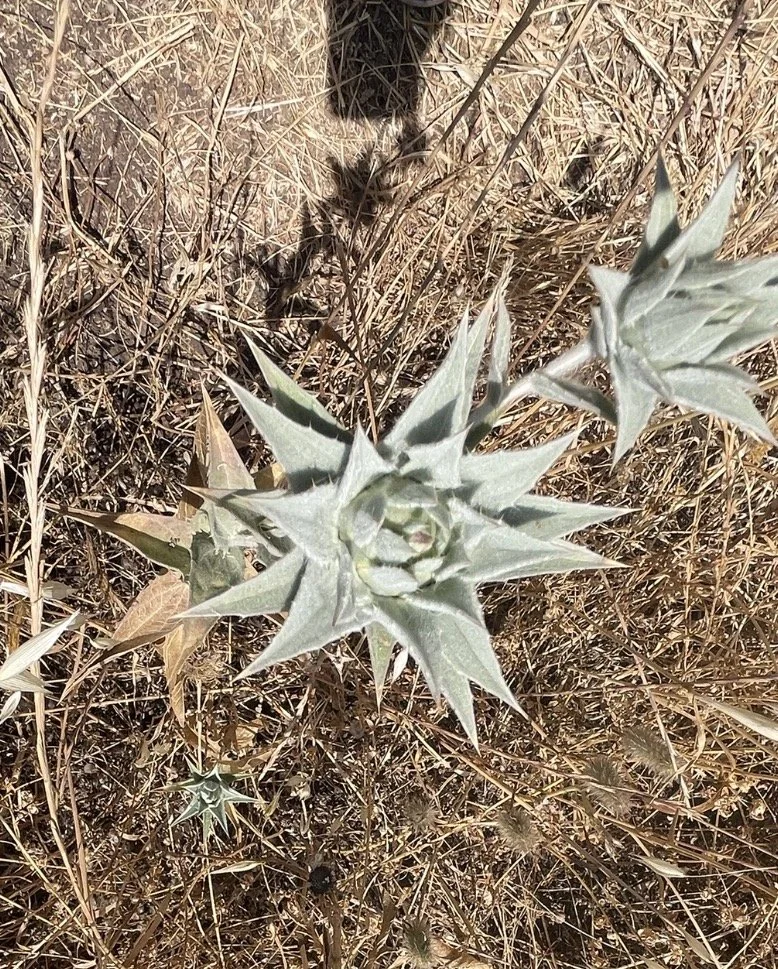
The ascent toward the ancient Talmudic village of Kfar Devora was steep, prickly, hot, and physically demanding enough to dissolve performance almost immediately. Breathing became audible. Women slowed for one another. Hands reached backward to help others climb over rock. Something beautiful happens when effort becomes shared. The nervous system stops posturing. The group begins moving as one organism.
And then suddenly the ancient village appeared.
Kfar Devora does not feel like a ruin. It feels inhabited by memory. The basalt stones still seem to hold voices. The pathways still feel walked upon. The wind itself carries the strange sensation that Torah spoken there never entirely disappeared.
This was the village connected to Rabbi Eliezer HaKappar, whose Beit Midrash was literally identified through an ancient basalt inscription discovered on-site:
זה בית מדרשו של רבי אליעזר הקפר
“This is the Beit Midrash of Rabbi Eliezer HaKappar.”
An actual basalt stone still stands there declaring those words. Suddenly the village no longer feels like an archaeological site or a collection of ruins from a distant past. It feels inhabited. The pathways, the stones, and the wind moving across the hills all begin carrying the unmistakable sensation that Torah once breathed there as part of ordinary life itself — not removed from the world and not floating above human existence, but woven directly into kitchens, homes, agriculture, weather, uncertainty, rebuilding, relationships, conversation, and the rhythms of daily existence.
Standing among those basalt ruins, Rabbi Eliezer HaKappar’s famous teaching landed with an entirely different depth:
הקנאה והתאוה והכבוד מוציאין את האדם מן העולם
Jealousy, desire, and honor remove a person from the world.
-Pirkei Avot 4:21
Usually this teaching is understood morally or psychologically. Yet in the expansiveness of the Golan, surrounded by wind, volcanic stone, and enormous open sky, it became almost physical in its clarity. Kinah / קנאה / jealousy pulls awareness outward into comparison. Taavah / תאוה / craving creates constant internal restlessness. Kavod / כבוד / ego traps the self in image, defensiveness, performance, and pressure. A person can move through life while no longer fully inhabiting it.
And perhaps this is part of what the Golan itself heals.
The basalt does not perform. The hills do not compete. The wind does not rush. Everything in the landscape slowly returns a person to presence.
Among the black volcanic stones, Rachel Leah spoke about the Yerushalmi’s description of Torah as:
אש שחורה על גבי אש לבנה
Black fire upon white fire.
-Yerushalmi Shekalim 6:1
Suddenly the basalt itself became Torah imagery. Dark volcanic stone beneath endless white-blue sky. Ancient fire cooled into physical form. Intensity transformed into habitation. The black basalt carried the unmistakable feeling of Malchut / מלכות: physicality, gravity, embodiment, the place where feet finally meet the earth. Not transcendence above the world, but revelation entering the world fully.
The women then formed a hexagonal structure together through partnered movement and hip-connected balancing exercises guided by Leah. There was laughter, awkwardness, softness, and trust as bodies leaned into one another and supported one another through imbalance. The shape itself became symbolic: the honeycomb, the beehive, hexagonal wisdom woven directly into creation itself. Bees create through collective intelligence, interdependence, and astonishing geometric precision. Suddenly the women themselves became like a living honeycomb structure — interconnected, supportive, holding one another through movement and imbalance.
A Supportive Hexagon
Six surrounding directions.
Containment.
Samech / ס.
Circle.
Holding.
The number six reflected movement in all directions, while sixty hinted toward the encompassing vessel capable of surrounding and holding light. Torah no longer existed only intellectually. It became movement, weight, relational awareness, and embodied geometry.
There was something profoundly healing about watching women walk together through the living landscape of Eretz Yisrael. Women helped one another climb rocks, laughed, sang, breathed heavily together on steep ascents, pooled resources, stood and swam in freezing waterfall pools, shared Torah and Shehechiyanu brachot while dripping wet from sweat and melted Hermon snow, floated in pools beneath black basalt cliffs, and rested in circles among wildflowers and volcanic stone.
It felt ancient.
And at the very same time, deeply present.
And then came the descent toward the waterfalls.
At some point along the trail, the landscape shifted from beautiful to surreal. The jungle-like canyon surrounding Devora Falls erupted into what one participant later described as “a psychedelic glimpse of Olam Haba.” Pink blossoms burst from dark rock. Iridescent blue insects hovered against shafts of light. Branches stretched simultaneously upward and downward while glowing canyon walls reflected moving water beneath them.
Fire.
Water.
Earth.
Wind.
Elemental fusion.
Maskit called it elemental fusion embodiment… and no other phrase could capture the atmosphere more accurately. It felt like tohu and tikkun / תהו ותיקון unfolding simultaneously through landscape itself. Light descending. Light rising. Itaruta d’letata / איתערותא דלתתא / awakening from below meeting itaruta d’le’eila / איתערותא דלעילא / awakening from Above.
The entire canyon appeared alive with movement and hidden intelligence, and yet nothing felt artificial. The experience emerged directly from creation itself.
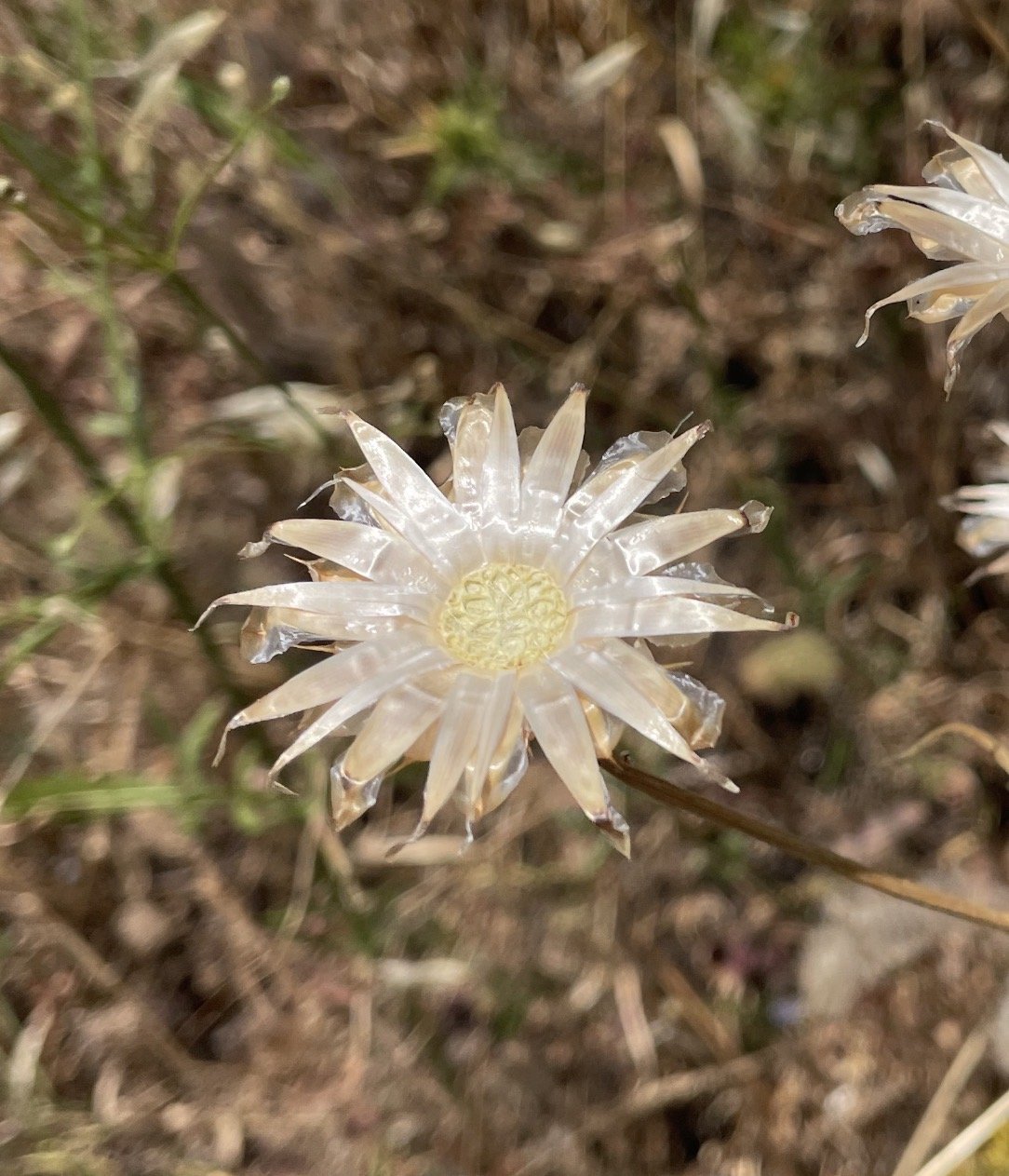
Torat HaTzeva often teaches that color is not decorative. Color is revelation entering perception. And there, surrounded by black basalt, red poppies, pink flowers, sage greens, shimmering water, and endless blue sky, the teaching became palpable.
Teva / טבע / nature shares the same gematria as Elokim / אלוקים.
Nature itself becomes revelation concealed within form.
Women later described replaying flashes of the day repeatedly afterward: the psychedelic hot pink flowers, the iridescent blue-winged insects, the glistening canyon walls, the red poppies described as “kisses from Hashem along the way,” the rainbow mist beneath the waterfall, the hexagonal samech of women supporting one another, and the vibration of waterfalls entering the bones themselves.
And then came Jilaboun Falls.
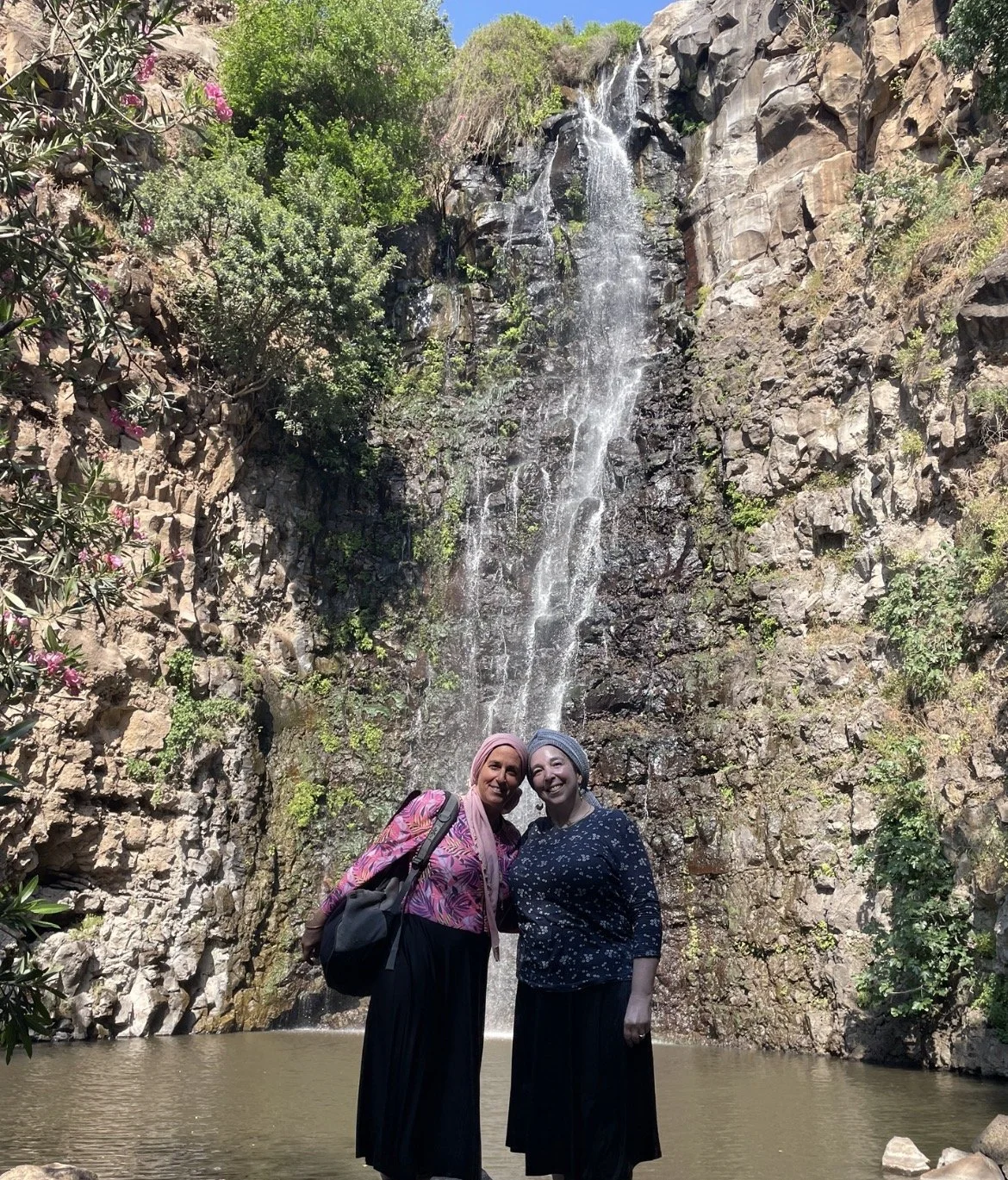
No description fully captures what happens when a body enters those waters after hours of hiking through heat and stone. The waterfall did not appear soft or delicate. It thundered downward through fractured volcanic cliffs shaped by pressure, eruption, and time. White water streamed over black basalt like living Torah imagery:
The entire canyon felt alive.
אש שחורה על גבי אש לבנה / The entire canyon felt alive. Mist filled the air with suspended droplets catching sunlight and refracting rainbow fragments through movement itself. Women entered the freezing water screaming, laughing, gasping, praying.
And then something shifted.
The nervous system recalibrated almost instantly.
One participant later described it as “Techiyat HaMetim / תחיית המתים / resurrection of the dead in the body itself.” Somehow that description did not feel exaggerated.
There are teachings in Kabbalah describing hevlei d’garma / הבלי דגרמא, subtle residual life-force carried within the bones themselves. Standing beneath the waterfall, one could almost physically understand the teaching. The cold Hermon snow-water struck overheated skin like shockwaves of awakening. Movement returned. Breath deepened. Rigidity softened. The body remembered itself.
Women climbed rocks afterward with renewed strength and surprising ease. Fatigue transformed into exhilaration. Beneath the waterfall itself, something deeper than refreshment unfolded: a return, a recalibration, a remembering.
One woman later reflected, “I felt the cold snow of the Hermon mountain and it was like nothing I’ve ever experienced. A complete recalibration of body and neshama / נשמה / soul. A deep freeze and then the reemerging warmth. Reshimu shel Yud Gimmel Middot HaRachamim / רשימו של י״ג מידות הרחמים / an imprint of the Thirteen Attributes of Compassion… some sort of resonance of awe and sensations of chashmal / חשמל.”
The experience was not escapism.
It was embodiment.
Not leaving the world.
Entering it more fully.
This distinction became one of the deepest themes of the entire day.
Rav Kook writes:
האדם צריך להתאחד עם הטבע ואז הוא מרגיש את הקדושה הממלאת את הכל
A person must unite with nature, and then they can feel the kedusha / קדושה / holiness filling all things.
-Orot HaKodesh
Not escape into nature.
Unite with it.
Lehitached / להתאחד.
The women eventually began the long climb back upward still wrapped in cold-water garments, skin carrying the sensation of waterfall mist and volcanic heat simultaneously. But nobody was quite the same anymore.
The path had worked on them.
The water had worked on them.
The basalt had worked on them.
The Torah had entered through the body.
And perhaps that is the deepest secret of walking in Eretz Yisrael after Shavuot. Revelation does not remain only atop the mountain. Eventually it must descend into legs, lungs, nervous systems, relationships, exhaustion, laughter, waterfalls, black basalt, and the ordinary holiness of embodied life.
By the end of the journey, the women were no longer merely observing the landscape; they had become part of it. The sound of the waterfalls continued moving internally. The black basalt remained underfoot. The canyon light lingered in memory like a reshimu / רשימו — a spiritual imprint refusing to disappear.
And somehow, through cold water, volcanic stone, shared ascent, breath, Torah, and presence, the body itself remembered what it means to feel alive again.
The fire had entered the stone.
The stone had begun glowing.
And for one luminous day in the Golan, Olam Haba seemed to shimmer quietly within this world.
The Avoda avoda after Shavuot: not remaining on the mountain forever, but learning how to descend without losing the fire.
How to carry revelation into ordinary existence. How to allow Torah not only to be learned intellectually, but embodied physically.


“I felt the cold snow of the Hermon mountain and it was like nothing I’ve ever experienced. A complete recalibration of body and neshama / נשמה / soul.
A deep freeze and then the reemerging warmth. Reshimu shel Yud Gimmel Middot HaRachamim / רשימו של י״ג מידות הרחמים / an imprint of the 13 Attributes of Compassion… some sort of resonance of awe and sensations of chashmal / חשמל.”