
דודי Dodi is the presence that says:
I know you.
I see you.
I have all the time in the world for you.
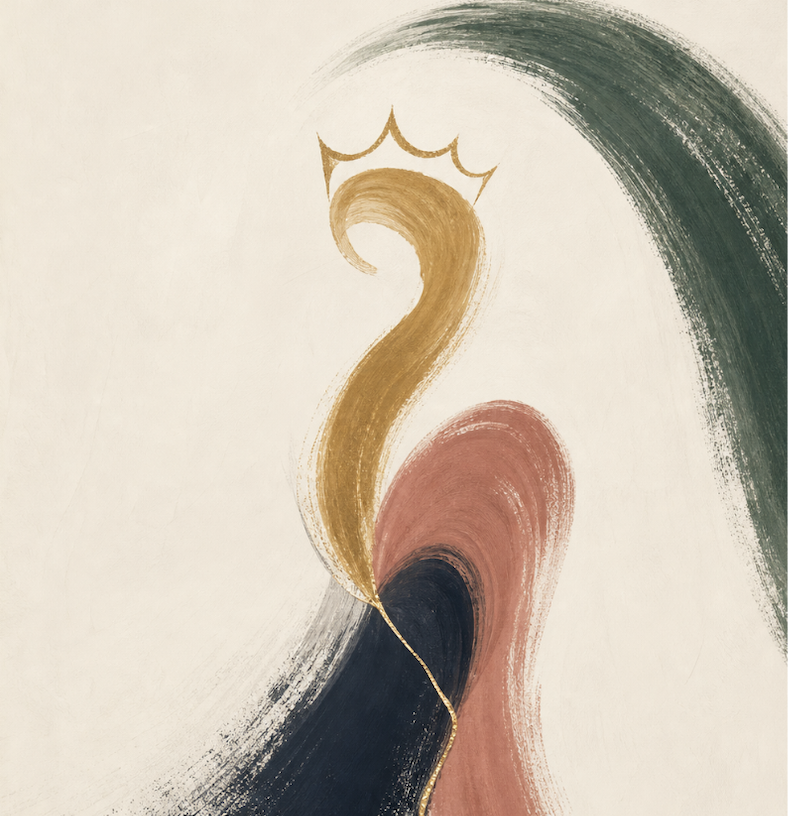
דודי Dodi Energy
4 Elu / Inspired by a meditation on the beach by Basya Kovacs
DODI
has all the time in the world for you.
This is the energy of דודי.
Not a distant love.
Not a love you must earn.
Not a love that becomes impatient when you need too much, feel too much, or take too long.
דודי is the presence that says:
I know you.
I see you.
I have all the time in the world for you.
This Dodi energy is not somewhere outside of us. It is already moving within us. With every breath, we can allow it to fill another space inside.
Breathe in:
אֲנִי לְדוֹדִי.
I am my Beloved’s.
Breathe out:
וְדוֹדִי לִי.
And my Beloved is mine.
The roshei teivot of אֲנִי לְדוֹדִי וְדוֹדִי לִי spell אלול.
All four words end with a yud:
י־י־י־י.
Together, the four yuds equal forty—the forty days from Rosh Chodesh Elul through Yom Kippur. Forty days in which the relationship is renewed. Forty days in which Moshe remained on the mountain and returned with the second luchot. Forty days that revealed that even after rupture, love can be rebuilt.
This is the first gateway of Elul:
אני לדודי ודודי לי—relationship.
Teshuvah is not beginning again alone.
It is returning to the Beloved.
It is a return to relationship / קשר, attachment / דבקות, and the innermost will / רצון הפנימי of the soul.
The “I” of אני לדודי is not the defended self. It is the essential self / האני העצמי emerging from concealment / הסתר and turning toward its Source / שורש.
Give Dodi a Sensation
Let the words become more than words.
Give דודי a sensation.
Where does your body recognize unconditional love? Perhaps it is warmth in your chest. A softening around your heart. More space in your throat. A quiet feeling that you do not have to run.
Breathe the Dodi energy into that place.
Let it become your inner operating system.
Let love move from surrounding light / אור מקיף into indwelling light / אור פנימי.
Surrounding light / אור מקיף is the love that surrounds me even when I cannot yet feel it. Indwelling light / אור פנימי is the love my vessel / כלי can receive, hold and experience from within.
With every breath, more of the surrounding love enters the vessel.
This is integration / התכללות: the light no longer remains only around me. It begins to live within me.
I am connected to the Source of love.
I am held within the Source of love.
I am love.
The King Has Come Into Your Field
During Elul, המלך בשדה—the King is in the field.
Ordinarily, a king is concealed within the palace. There are gates, guards and protocols. But before the king enters the city, he comes into the field. There, anyone may approach him. He receives every person בסבר פנים יפות and shows each one פנים שוחקות—a smiling face.
The field is not the place where we are perfectly composed.
It is where we work, struggle and become covered with dust. It is the place of our unfinished stories.
And that is precisely where the King meets us.
The field / שדה is the meeting place between the Infinite light / אור אין סוף and the unfinished human vessel / כלי.
The King does not ask the field to become a palace before He enters it.
His presence reveals the inner point / נקודה פנימית already hidden within the field.
This is revelation within concealment / גילוי בתוך ההסתר.
The King does not wait for us to become healed enough, holy enough or emotionally regulated enough. He enters the field of our actual lives.
He comes to the place where you feel blocked from love.
He comes to the tightness.
He comes to the part of you that still believes:
I have to be small.
My feelings are too much.
My needs push people away.
If I let myself be fully seen, I will be abandoned.
The King enters that field and smiles.
His smile is not denying your pain. His smile is showing you that your pain has never made you unlovable.
The smiling face / פנים שוחקות awakens the innermost face / פנימיות הפנים within us.
The Hebrew word for face / פנים shares its letters with inwardness / פנימיות. To encounter Hashem’s face is to encounter the inwardness beneath appearances—the Divine will / רצון העליון that has never stopped desiring connection with us.
Elul as a Place of Refuge
Another remez of Elul appears in the Torah’s description of a person who caused harm unintentionally:
וְהָאֱלֹקִים אִנָּה לְיָדוֹ וְשַׂמְתִּי לְךָ מָקוֹם—“God caused it to come to his hand, and I will establish for you a place.”
The words:
אִנָּה לְיָדוֹ וְשַׂמְתִּי לְךָ
form the roshei teivot אלול.
The Arizal’s teachings, recorded in Pri Etz Chaim, explain that this pasuk alludes to Elul as a time Hashem has given us for kapparah. Hashem is especially close to those who call to Him during this month.
Elul is not only a time.
It is a makom—a place Hashem prepares for us.
A place of refuge.
A place where we can face what happened without being destroyed by it. A place where responsibility does not become shame. A place where the mistakes of the past do not have to imprison the future.
We enter Elul carrying the parts of ourselves that acted without awareness, the parts that became frightened, reactive or lost.
Hashem says:
וְשַׂמְתִּי לְךָ מָקוֹם.
I have made a place for you.
Not only for the perfected you.
For this you.
Elul creates sacred space / חלל פנוי around the wounded place.
Not emptiness that abandons, but spaciousness that allows something new to emerge.
Within this protected space / מקום שמור, the soul can move from constricted consciousness / מוחין דקטנות toward expanded consciousness / מוחין דגדלות.
The constriction is not attacked. It is held until expansion becomes safe.
Finding the Place That Needs Dodi
Think of one relationship—or one part of yourself—where love does not flow as freely as you would like.
Quietly complete the sentence:
I would like to feel more love toward…
Do not force yourself to feel something you do not yet feel. Instead, notice the blockage.
Where does it live in your body?
Put your hand there.
Do not be afraid of the sensation. Do not erase it or rush to transform it. If it disappears because you have pushed it away, gently invite it back—not so that it can flood you, but so that you can finally be with it.
Breathe.
Around the constriction, create a little more space.
This is Dodi energy: not overpowering the wounded place, but holding the space around it.
I am here.
I am holding the spark.
I am not leaving.
This is holding the vessel / החזקת הכלי without demanding that it immediately receive more light than it can contain.
Too much light without a vessel becomes shattering / שבירת הכלים. Dodi energy does not overwhelm the vessel. It enters according to measure / בהדרגה, with patience / סבלנות and compassion / רחמים.
The holiness is not only in the light.
The holiness is also in protecting the vessel.
Circumcising the Heart
The Torah promises:
וּמָל ה׳ אֱלֹקֶיךָ אֶת לְבָבְךָ וְאֶת לְבַב זַרְעֶךָ—“Hashem your God will circumcise your heart and the heart of your children, to love Hashem your God.”
The words:
אֶת לְבָבְךָ וְאֶת לְבַב
form the roshei teivot אלול.
This is another gateway:
Elul is the circumcision of the heart.
Circumcision of the heart / מילת הלב is the removal of the covering / ערלה, not the removal of the heart’s sensitivity.
The covering conceals. The heart feels.
Elul does not make the heart harder. It reveals the tenderness / רכות that the covering was trying to protect.
There are coverings around the heart—layers created by fear, shame, disappointment and experiences we did not yet have the capacity to hold.
The covering is not the heart.
The blockage is not the essence.
The blockage is a garment / לבוש.
The essence / עצם remains whole.
In the language of פנימיות התורה, the external expression / חיצוניות may become constricted while the inward point / נקודה פנימית remains bound to its Source.
Even within distance, there is hidden attachment / דבקות נעלמת.
Even within concealment, the soul retains its essential purity / טהרת העצם.
Beneath the protective layer, the heart is still alive. It still knows how to love. It still knows that it belongs to Dodi.
There is a milah we attempt from below:
וּמַלְתֶּם אֵת עָרְלַת לְבַבְכֶם—“You shall circumcise the covering of your heart.”
And there is a deeper milah that comes from Above:
וּמָל ה׳ אֱלֹקֶיךָ אֶת לְבָבְךָ—“Hashem will circumcise your heart.”
We create the opening of אני לדודי.
Hashem completes the opening through ודודי לי.
This is the movement from awakening from below / אתערותא דלתתא to awakening from Above / אתערותא דלעילא.
My willingness becomes a vessel / כלי.
His response becomes light / אור.
Yet at the deepest level, even my willingness was awakened by a hidden light from Above. The call to return was already Dodi knocking from within the heart:
קוֹל דּוֹדִי דוֹפֵק—The voice of my Beloved is knocking.
We soften what we can soften. We become willing. We breathe into the place. But we do not have to perform surgery on our own souls.
Hashem says:
You make the opening.
I will help you remove the covering.
Rebuilding the Inner Beit HaMikdash
Rav Tzadok HaKohen teaches that when a person falls, the inner destruction begins in the heart. Teshuvah therefore moves in the opposite direction: first we rebuild the heart, and from the restored heart, the rest of our life can return from exile.
The heart is the inner Beit HaMikdash.
Before correcting every behavior, we ask:
Is someone dwelling inside my heart?
Is my heart a home?
Can the Shechinah rest here?
Can the heart become a dwelling place / דירה בתחתונים?
Can the lowest, most frightened place become a vessel for the Divine Presence / השראת השכינה?
The inner Beit HaMikdash is not built by rejecting our humanity. It is built when the Divine Presence / שכינה is invited into the physical body, the vulnerable heart and the places that once felt exiled.
Can I rest here?
When the heart feels abandoned, our thoughts and actions become scattered. But when we bring Dodi energy into the heart, the dispersed parts begin to gather.
בונה ירושלים ה׳, נדחי ישראל יכנס—“Hashem rebuilds Yerushalayim; He gathers the dispersed of Israel.”
First, the inner Yerushalayim is rebuilt.
Then the exiled parts can come home.
This is gathering the sparks / קיבוץ הניצוצות.
Each feeling that was pushed away carries a hidden spark / ניצוץ קדוש. When the feeling is met with truth and compassion, its trapped energy can return to holiness / קדושה.
What appeared to be only pain may contain longing.
What appeared to be neediness may contain a capacity for attachment / דבקות.
What appeared to be “too much” may contain an unrectified abundance of light / ריבוי אור waiting for a stronger and gentler vessel.
This is not avoiding responsibility. It is creating the inner vessel from which real change becomes possible.
The Child Who Learned to Become Small
Allow the sensation to lead you gently—not forcefully—to an earlier version of yourself.
Perhaps you see a little girl.
Look at her.
She may have learned that being sensitive was dangerous. Perhaps she felt other people’s emotions before she understood her own. Perhaps she was called needy when what she needed was connection. Perhaps she learned to become small so that the people around her would remain comfortable.
Listen to her belief:
I have to be small.
Now bring her the Dodi energy.
Tell her:
It is easy to love you.
You are not too much.
Your feelings are not too much.
Your needs matter.
You do not have to disappear in order to remain connected.
Rav Tzadok teaches that a person who experiences powerful desires and intense feelings should not assume that this intensity proves she is damaged. That same intensity can become a vessel for a powerful love and yearning for truth.
Your sensitivity is not the enemy.
Your intensity is not a defect.
It is energy seeking its shoresh.
It is a fallen spark / ניצוץ שנפל asking to be elevated / העלאת הניצוצות.
The feeling does not need annihilation / ביטול המציאות. It needs transformation / התהפכות and return to its root / חזרה לשורש.
The same energy that once attached itself to fear can become longing for Hashem / געגועים לה׳.
The same intensity that once became panic can become holy yearning / כיסופין דקדושה.
It is longing that has not yet remembered its Beloved.
The avodah is not to erase the energy. It is to return it to its source.
I am not too much.
I am carrying a great capacity to love.
My longing can return to Dodi.
This is not suppression / דחייה.
It is sweetening / המתקה.
The Baal Shem Tov’s movement of submission / הכנעה, separation / הבדלה, and sweetening / המתקה teaches us not to skip the first encounter with what hurts.
First, I soften before what is true.
Then, I distinguish the wound from my essential identity.
Finally, the energy hidden inside the wound can be sweetened and returned to love.
Moving at the Pace of the Tender Parts
Do not demand that the little girl believe you immediately.
Yaakov Avinu says:
וַאֲנִי אֶתְנָהֲלָה לְאִטִּי לְרֶגֶל הַמְּלָאכָה—“I will make my way slowly, according to the pace of the work.”
The letters of Elul are hidden within the opening words:
וַאֲנִי אֶתְנָהֲלָה לְאִטִּי לְרֶגֶל.
This is the Elul teaching of זריזות במתינות—moving with alacrity and gentleness together.
The voice of Esav says:
Fix it now.
Force the opening.
Get over it already.
But Yaakov understands:
הַיְלָדִים רַכִּים—the children are tender.
The children within us are also tender.
Healing that is forced cannot become a home. Teshuvah that attacks the self cannot reveal Dodi.
Hashem has all the time in the world for this child.
And so do you.
This is patience / ארך אפיים—literally, a long breath.
The Divine quality of patience creates time and space between the wound and the response. Within that space, choice / בחירה returns.
I do not need to react from constricted consciousness / קטנות.
I can breathe until expanded consciousness / גדלות becomes available.
Just stay with her.
This too is teshuvah. תשובה is not merely regretting what we have done. It is return—bringing home the pieces of ourselves that went into exile.
The Rose Surrounded by Mercy
The verse does not end with אני לדודי ודודי לי. It continues:
הָרֹעֶה בַּשּׁוֹשַׁנִּים—“The One Who shepherds among the roses.”
The Zohar begins its revelation of Torah’s inner dimension with the image of the שושנה—the rose.
Just as a rose has thirteen petals, the Zohar teaches, Knesset Yisrael is surrounded by the thirteen channels of Divine compassion, the י״ג מכילין דרחמי.
The rose grows among thorns.
Its tenderness does not mean it has never been wounded. Its petals open while the thorns remain nearby.
This is the secret of Dodi energy.
Hashem does not love only the parts of us that have no thorns. He shepherds us בשושנים—among the roses, within the complexity of tenderness and protection, opening and contraction.
In Elul, the thirteen Middot HaRachamim surround the neshamah.
We can imagine thirteen channels of compassion encircling the heart.
Not forcing it open.
Protecting it while it opens.
The thirteen channels of compassion / י״ג מכילין דרחמי flow from the supernal will / רצון העליון, beyond ordinary calculation.
This is compassion that does not ask whether the rose has earned the right to open.
It sees the essential beauty / חן עצמי already concealed within the thorns.
The thorns belong to protection / שמירה.
The rose belongs to revelation / גילוי.
Both are held within Divine compassion / רחמים עליונים.
The Ramak teaches in Tomer Devorah that the purpose of learning Hashem’s Middot is to embody them:
מַה הוּא רַחוּם, אַף אַתָּה רַחוּם—Just as He is compassionate, you become compassionate.
Receive rachamim.
Then become a channel for rachamim.
Offer that compassion to the child within you. Offer it to the person who disappointed you. Offer it without surrendering truth and without abandoning necessary boundaries.
The rose does not remove its boundaries in order to open.
It opens safely within them.
This is rectified gevurah / גבורה מתוקנת: a boundary that protects love rather than blocking it.
Chesed / חסד says, “I want to give.”
Gevurah / גבורה says, “I will create a safe vessel.”
Tiferet / תפארת unites them as compassionate truth / רחמים ואמת.
Dodi energy is not love without boundaries.
It is love whose boundaries have become vessels for deeper connection.
From Isolation to Relationship
There is another Elul remez in the meeting of Moshe and Yitro:
וַיִּשְׁאֲלוּ אִישׁ לְרֵעֵהוּ לְשָׁלוֹם—“Each one asked about the other’s well-being.”
Elul is hidden within these words.
The avodah of Elul is not only between me and Hashem. It is also between me and you.
Can I ask how you are—and remain present long enough to receive the answer?
Can I look you in the eyes without immediately preparing my response?
Can I make space for your experience without losing myself?
Can I allow you to exist without needing to change you?
The familiar Elul remez from Megillat Esther teaches the same movement:
אִישׁ לְרֵעֵהוּ וּמַתָּנוֹת לָאֶבְיוֹנִים.
The roshei teivot form אלול.
The Dodi energy cannot remain a private spiritual experience. The love I receive must begin to move toward another.
אני לדודי awakens tefillah and intimacy with Hashem.
איש לרעהו ומתנות לאביונים brings that love into relationship, generosity and actual care.
The tikkun of the inner child does not end with learning to receive love. It allows us to become a safer presence for another person.
This is love of another Jew / אהבת ישראל as a vessel for Divine unity / אחדות ה׳.
When I make room for another soul, I reveal that our separate bodies do not divide the root of our souls / שורש הנשמות.
At the level of the root / שורש, we belong to one collective soul / נשמה כללית.
The love moving between us is not only interpersonal. It is the Shechinah gathering Her dispersed sparks into unity / ייחוד.
דודי: The Divine Point Within Love
The word דודי contains דוד and a י.
דוד means “beloved,” and it is also the name David.
David HaMelech embodied a heart that could break without closing. He could cry, yearn, sing and return. His strength was not the absence of vulnerability. His strength was that every experience became another doorway into relationship with Hashem.
The final י, the smallest letter, can be experienced as the nekudah Elokit—the Divine point that can never be destroyed.
Even when the heart has contracted, the yud remains.
Even when love has become buried beneath protection, the essential point of love remains whole.
Rav Tzadok teaches that our thoughts, speech and actions are garments of the soul. They can become stained, but they are not the essential soul itself.
עצם הנפש—the essence of the soul—remains a חלק אלוה, a Divine portion.
The garment may require cleansing.
The essence remains connected.
This is the distinction between essence / עצם and garments / לבושים.
A garment may become stained.
A behavior may require repair / תיקון.
But the essential soul / עצם הנשמה remains a pure Divine portion / חלק אלוה ממעל ממש.
Teshuvah does not create a new soul.
Teshuvah reveals the soul that was concealed.
דוד־י:
The vulnerable heart, held by the Divine point.
The human beloved, held within the Infinite Beloved.
The yud / י is the point before expansion, the concentrated point of wisdom / נקודת החכמה that contains an entire world in potential.
It is small enough to remain present inside the narrowest place / מֵצַר.
From this point, new expansion / התרחבות can emerge.
The yud whispers:
There is still a point of light / נקודת אור inside you that no darkness can erase.
The Courage to Believe in Goodness
In Elul we recite:
לוּלֵא הֶאֱמַנְתִּי לִרְאוֹת בְּטוּב ה׳ בְּאֶרֶץ חַיִּים—“Had I not believed that I would see the goodness of Hashem in the land of life…”
The word לולא contains the letters of אלול in reverse.
Sometimes our Elul journey feels reversed.
Instead of moving directly from fear to love, we return through the back door. We begin inside the constriction. We meet the part that does not trust. We encounter the child who cannot yet imagine that goodness will remain.
לולא האמנתי.
What would happen if I believed—even a little—that I could see goodness here?
Not only in another world.
Not only after I become someone else.
בארץ חיים—within the land of my living.
Dodi energy is the courage to remain open to the possibility of goodness, even before I can see how it will arrive.
This is hidden goodness / טוב הגנוז.
Sometimes goodness appears as revealed kindness / חסד גלוי. Sometimes it remains concealed within a process we do not yet understand.
Faith / אמונה is not denying the concealment.
It is sensing that the hiddenness / הסתר is not empty of Hashem.
Even here:
מְלֹא כָל הָאָרֶץ כְּבוֹדוֹ—The entire earth is filled with His glory.
The Movement of Shechinah and Kudsha Brich Hu
The Zohar describes the bond between Hashem and Klal Yisrael as the union of קודשא בריך הוא ושכינתיה—the Holy One and His Shechinah.
The Shechinah is Hashem’s indwelling Presence: the Divine light that enters our world, accompanies us into exile and rests within the hidden places.
When we say אני לדודי, the “I” begins to turn toward the Beloved. This is the awakening from below, the אתערותא דלתתא of Elul.
Rav Tzadok explains that because these words are spoken after a rupture, the pasuk begins with אני לדודי. First, we make the movement from below. We open even the smallest opening.
פִּתְחוּ לִי פֶּתַח אֶחָד שֶׁל תְּשׁוּבָה—Open for Me one opening of teshuvah.
Then comes ודודי לי—the response from Above:
וַאֲנִי אֶפְתַּח לָכֶם פְּתָחִים—I will open great gateways for you.
Yet the awakening below was never truly alone. The thirteen Middot HaRachamim were already surrounding the rose, giving us the strength to turn.
Our movement toward Hashem reveals that Hashem was already moving toward us.
Our turning does not manufacture the love.
It allows us to receive the love that was present all along.
This is the hidden unity / ייחוד הנעלם beneath the experience of separation / פירוד.
From our side, there can be exile / גלות, constriction / צמצום, and concealment / הסתר פנים.
From the side of the Divine root, the bond / קשר עצמי was never severed.
Teshuvah reveals not only that we can return to Hashem.
It reveals the deeper truth:
At the level of essence / עצם, we never stopped belonging.
Breathing From Within
The Torah says that Hashem breathed into Adam the breath of life. Tanya explains that when one blows, the breath comes from deep within the person. Our neshamah is therefore not a distant creation. It is, כביכול, something breathed from the innermost Divine Presence.
Your breath carries the memory of where you come from.
Breath / נשימה carries soul / נשמה.
Each breath is a movement of running and returning / רצוא ושוב.
Inhalation receives life / שפע.
Exhalation releases and returns.
Between them is a still point / נקודת השקט—a moment in which the soul remembers that it is continuously being breathed into existence.
Breathe in:
אני לדודי.
The Shechinah within me opens to receive.
Breathe out:
ודודי לי.
Kudsha Brich Hu responds.
This is unification / ייחוד.
The receiving presence / שכינה turns toward the Source, and the giving light / קודשא בריך הוא flows into the vessel.
The purpose is not to dissolve the human self. It is to bring light and vessel / אור וכלי, giver and receiver / משפיע ומקבל, into alignment / השתוות הצורה.
Now invite another person gently into your inner field.
Look at them—not only through the lens of what they did wrong, and not by abandoning your boundaries. See the place in them that also needs Dodi energy.
Perhaps they soften.
Perhaps they feel safer to connect.
Perhaps nothing changes yet.
You do not have to force an outcome. You are simply allowing love to have another possibility.
You are opening a new channel / צינור חדש.
The old channel carried fear, protection and inherited constriction.
The new channel carries compassion / רחמים, presence / נוכחות, and connection / חיבור.
This is a tikkun of relationship / תיקון הקשר: not erasing what happened, but allowing a new flow / שפע חדש to become possible.
And when the old abandonment rises, breathe.
Hold the little girl without becoming flooded by her fear.
Tell her:
I know you.
I love you more than you can presently know.
I am not abandoning you.
I am sending Dodi energy into this place.
Pause within the inner space / חלל פנימי.
Feel the surrounding light / אור מקיף.
Feel the indwelling light / אור פנימי.
Feel the vessel / כלי expanding without breaking.
Feel the hidden point / נקודה פנימית beginning to glow.
This is Dodi energy:
Love / אהבה becoming presence / נוכחות.
Presence becoming trust / אמונה.
Trust becoming attachment / דבקות.
Attachment becoming return / תשובה.
The King is in the field.
Elul is your place of refuge.
The thirteen petals of rachamim surround you.
The covering around the heart is softening.
The inner Yerushalayim is being rebuilt.
The tender child is being allowed to move slowly.
The intensity that once frightened you is returning to its shoresh as a great capacity to love.
And even when the way seems hidden, לולא האמנתי—something within you still believes that you will see the goodness of Hashem in the land of life.
The King is not frightened by what He finds in your field.
He is looking into your eyes with פנים שוחקות, a smiling face, and reminding you:
You are My beloved.
The thorn is not the rose.
The covering is not your heart.
Your heart has always known the way home.
Because home / בית is not only where you are going.
Home is the essential bond / קשר עצמי that has been carrying you all along.
אֲנִי לְדוֹדִי וְדוֹדִי לִי.
I turn toward my Beloved.
And within my turning, I discover:
My Beloved was already here.
Mekorot
Shir HaShirim 6:3: אני לדודי ודודי לי הרועה בשושנים.
Shir HaShirim 5:2: קול דודי דופק.
Zohar, Introduction 1a: Knesset Yisrael as the שושנה, surrounded by the thirteen channels of Divine mercy.
Zohar I, 134a; Tzidkat HaTzadik §29: rebuilding the inner Yerushalayim and heart before gathering the dispersed limbs and actions.
Zohar II, 163a; Tzidkat HaTzadik §201: serving Hashem with the totality of nefesh, ruach and neshamah.
Likkutei Torah, Re’eh, Ani LeDodi: אתערותא דלתתא, the thirteen Middot HaRachamim and the mashal of המלך בשדה.
Pri Etz Chaim, Sha’ar Rosh Hashanah, chapter 1: אנה לידו ושמתי לך as the Elul refuge given for kapparah.
Devarim 10:16 and 30:6: the two dimensions of circumcising the heart.
Baal HaTurim to Devarim 30:6: את לבבך ואת לבב as roshei teivot אלול.
Peri Tzadik, Rosh Chodesh Elul §4: אני לדודי as the opening from below and ודודי לי as Hashem’s opening from Above; the שושנה and thirteen Middot HaRachamim.
Tzidkat HaTzadik §29: teshuvah begins by rebuilding the heart.
Tzidkat HaTzadik §44: intense desire can become a vessel for powerful love and longing for truth.
Tzidkat HaTzadik §215: the heart as a vessel for receiving blessing.
Tzidkat HaTzadik §262: thoughts, speech and actions are garments; the soul’s essence remains Divine.
Tomer Devorah, chapter 1: embodying the Divine Middot of compassion.
Shemot 21:13: אנה לידו ושמתי לך, Elul as a place of refuge.
Bereishit 33:14: ואני אתנהלה לאיטי לרגל המלאכה, moving according to the pace of the tender parts.
Shemot 18:7: וישאלו איש לרעהו לשלום, relational presence and repair.
Esther 9:22: איש לרעהו ומתנות לאביונים, chesed and tzedakah.
Tehillim 27:13: לולא האמנתי לראות בטוב ה׳.
Yeshayahu 6:3: מלא כל הארץ כבודו.
Bereishit 2:7; Tanya, chapter 2: the neshamah as Divine breath drawn from within.
Tanya, chapters 4–5: thought, speech and action as garments of the soul; Torah as an encompassing and indwelling Divine embrace.
Tanya, chapter 36: the purpose of creation as a dwelling place for Hashem in the lower worlds / דירה בתחתונים.
Sefer Yetzirah 1:8: the movement of the spiritual life as רצוא ושוב.
Etz Chaim, Sha’ar HaIgulim; the teachings of the Arizal on surrounding light / אור מקיף, indwelling light / אור פנימי, vessels / כלים, and the shattering of the vessels / שבירת הכלים.
The teachings of the Baal Shem Tov on submission / הכנעה, separation / הבדלה, and sweetening / המתקה.
Hints of Elul: A 31-Day Journey of Teshuva & Renewal: the hidden Elul remazim as gateways to Torah, meditation, embodiment and return.
Prioritized initiatives
Analytical models then quantify potential scenarios, allowing decision makers to compare paths with clarity. Strategists translate findings into actionable plans, detailing resources, timelines, and governance structures.